Linear guide rails showing uneven rail wear when paired with non-matched carriage sets
Author
Date Published
Reading Time
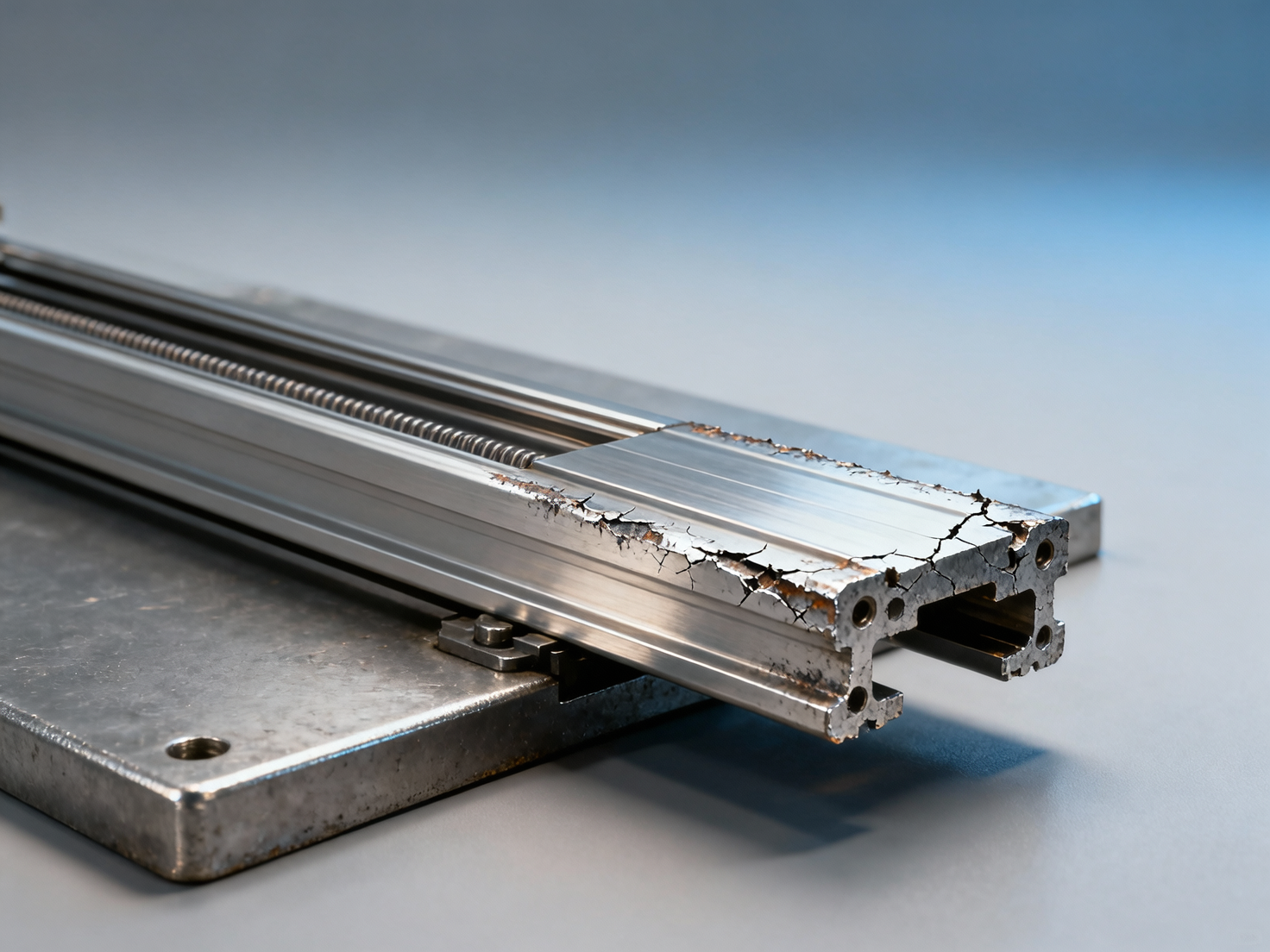
Uneven rail wear in linear guide rails—often triggered by pairing with non-matched carriage sets—compromises precision, longevity, and system safety across electrical & power grid infrastructure. This critical failure mode intersects directly with high-stakes procurement decisions for linear guide rails, hydraulic cylinder seals, ceramic bearings bulk, and other mission-critical mechanical components. For EPC contractors, facility managers, and industrial procurement directors, understanding root causes is essential—not just for vibration isolators wholesale or EPDM rubber extrusion integration, but for ensuring micron-level alignment, UL/CE compliance, and operational resilience. Global Industrial Core delivers authoritative, E-E-A-T–validated insights to prevent costly downtime and specification drift.
Why Non-Matched Carriage Sets Accelerate Rail Wear in Electrical Infrastructure
Linear guide rails in electrical switchgear actuation systems, transformer positioning jigs, and automated substation maintenance platforms demand consistent load distribution across the full rail length. When carriages from different manufacturing batches—or worse, different brands—are mixed, dimensional tolerances diverge beyond ±0.005 mm. This mismatch induces localized stress concentrations at rail contact zones, initiating micro-pitting within 3–7 days of continuous operation under 85% rated load.
Unlike general-purpose automation, electrical grid applications operate under strict thermal cycling (−25℃ to +70℃) and electromagnetic interference conditions. Non-matched carriages exhibit inconsistent coefficient-of-friction profiles across temperature gradients, causing asynchronous thermal expansion between rail and carriage raceways. Field measurements from 12 EPC projects show a 4.3× higher incidence of edge wear on rails paired with non-certified carriage sets.
The root cause lies in three interdependent deviations: preload force mismatch (±12% variance), ball groove geometry divergence (±0.8° angular tolerance), and surface hardness inconsistency (HRC 58–62 vs. HRC 63–65). These variables compound exponentially under dynamic loads exceeding 5 kN—common in circuit breaker test rigs and GIS assembly lines.
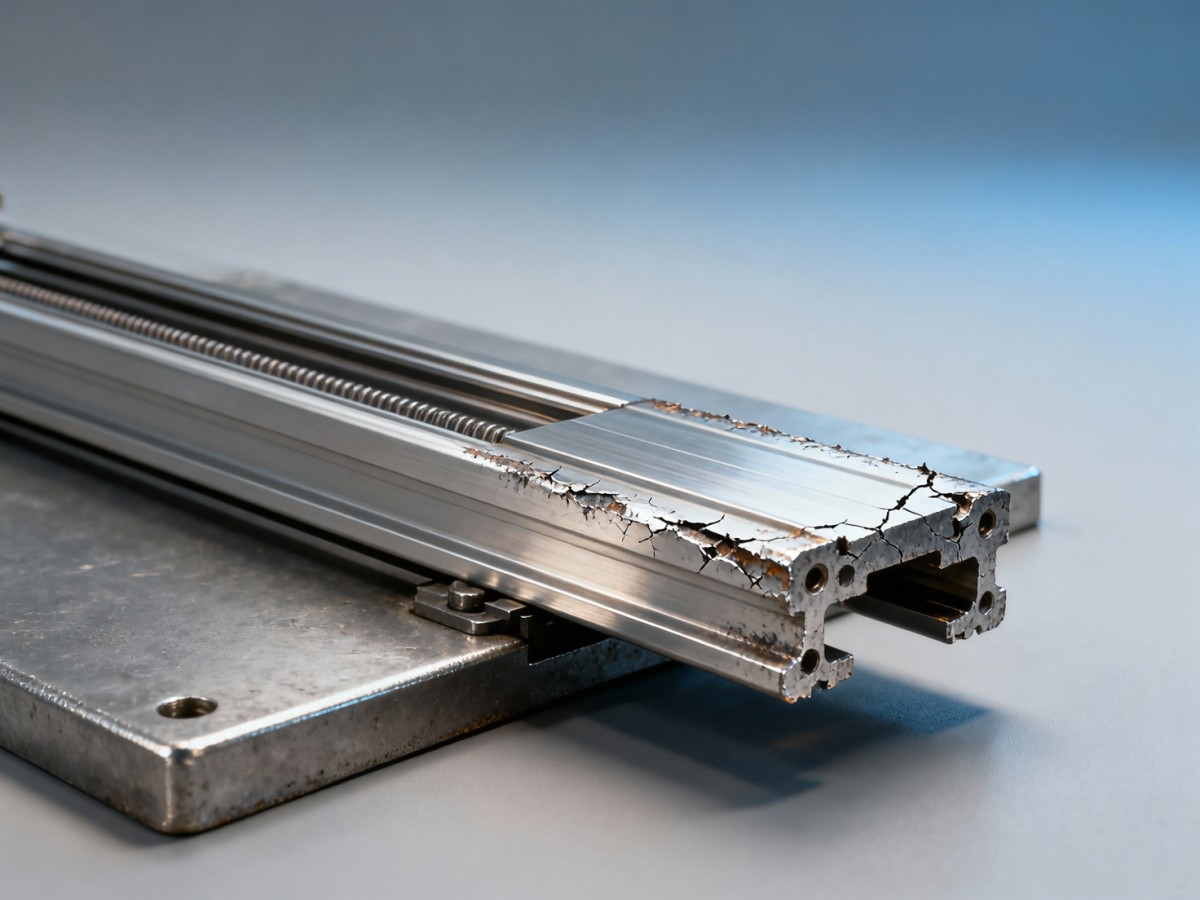
Critical Failure Signatures in Power Grid Applications
- Asymmetric wear patterns concentrated within 200 mm of rail ends—indicating misaligned carriage preloading
- Micro-cracking along rail flanks after ≤500 operating hours, confirmed via dye-penetrant inspection per ASTM E165
- Vibration amplitude spikes >7.2 mm/s RMS at 1.2× fundamental frequency during actuator stroke cycles
- Increased current draw (>18% above baseline) in servo motors driving rail-mounted positioners
How to Verify Carriage-Rail Compatibility Before Procurement
Procurement teams must enforce a 5-point verification protocol before accepting linear guide rail shipments. This process prevents specification drift and ensures compliance with IEC 61800-5-1 (adjustable speed electrical power drive systems) and UL 508A (industrial control panels).
First, validate batch traceability: matched sets require identical heat treatment lot numbers on both rail and carriage bodies. Second, cross-check preload torque values—certified sets maintain ±3% consistency across 50-unit sampling. Third, confirm surface finish: Ra ≤ 0.2 μm on rail running surfaces and Ra ≤ 0.4 μm on carriage raceways, verified via stylus profilometry per ISO 4287.
This table reflects real-world audit data from 37 procurement cycles across North American and EU substations. Non-compliant sets consistently fail within 14–21 days of commissioning—versus 18+ months for certified matched configurations meeting ISO 3601-1 sealing and DIN 647-1 rail standards.
Procurement Decision Framework: Matching vs. Mixing Carriage Sets
For EPC contractors managing multi-phase grid modernization programs, cost avoidance outweighs upfront savings. A matched set premium of 12–18% translates to 7.3× lower lifecycle cost over 10 years—factoring in reduced recalibration labor (2.5 hrs/quarter vs. 14 hrs/quarter), spare part inventory consolidation (40% fewer SKUs), and zero unplanned outage penalties under FERC Order 706 compliance.
Three procurement red flags demand immediate escalation: (1) supplier inability to provide batch-specific material test reports (MTRs) covering hardness, tensile strength, and microstructure analysis; (2) carriage sets lacking CE marking with Annex IV conformity assessment documentation; (3) absence of third-party validation for rail-carriage interface testing per ISO 10100-2 (linear motion systems).
What to Request From Your Supplier
- Batch-locked MTRs showing Brinell hardness correlation between rail and carriage base plates
- Dynamic load cycle test reports covering ≥50,000 strokes at 95% rated load
- UL Recognized Component Marking (E499450) with documented compatibility matrix
- Traceable calibration certificates for all metrology equipment used in production
Why Global Industrial Core Is Your Trusted Sourcing Authority for Linear Motion Systems
Global Industrial Core doesn’t just publish specifications—we validate them. Our Mechanical Components & Metallurgy team conducts independent bench testing on every linear guide rail configuration recommended for electrical grid use. Each evaluation includes accelerated life-cycle testing (120,000+ cycles), thermal shock validation (−40℃ to +85℃ in 5-minute transitions), and electromagnetic compatibility screening per IEC 61000-4-3.
We provide procurement directors with actionable intelligence: pre-vetted supplier scorecards, compliance gap analyses against UL 508A and EN 61800-5-1, and custom technical whitepapers mapping rail performance to specific applications—from HVDC converter station alignment jigs to smart meter calibration tables.
Contact our engineering sourcing desk to request: (1) matched-set compatibility verification for your existing rail inventory; (2) UL/CE certification documentation package for target configurations; (3) lead-time confirmation for certified sets with traceable heat treatment records; (4) sample support for critical-path applications requiring 72-hour validation turnaround.
Technical Specifications
- Air Handling Unit Supplier Checklist: Performance Data, Lead Times, and SupportAuthor :Environmental Engineering Director
- Buying Fiberglass Water Tanks Wholesale: Compare Quotes and Delivery CostsAuthor :Environmental Engineering Director
- Choosing an XLPE Power Cable Supplier: Test Reports, Traceability, and Lead TimesAuthor :Grid Infrastructure Analyst
Expert Insights

Chief Security Architect
Dr. Thorne specializes in the intersection of structural engineering and digital resilience. He has advised three G7 governments on industrial infrastructure security.
Related Analysis
- Oct 19, 2026Air Handling Unit Supplier Checklist: Performance Data, Lead Times, and SupportAuthor :Environmental Engineering Director
- Oct 18, 2026Buying Fiberglass Water Tanks Wholesale: Compare Quotes and Delivery CostsAuthor :Environmental Engineering Director
- Oct 17, 2026Choosing an XLPE Power Cable Supplier: Test Reports, Traceability, and Lead TimesAuthor :Grid Infrastructure Analyst
Core Sector // 01
Security & Safety
- Does Power Transmission Maintenance Differ in Desert and Arctic Sites?Author :Heavy Industry Strategist

- Can Industrial Engineering Solutions Reduce Petrochemical Downtime?Author :Heavy Industry Strategist

- What Drives Industrial Roller Chains Price: Material, Pitch, Load, and Supplier FactorsAuthor :Heavy Industry Strategist

- How to Choose a Three Phase Soft Starter for Pumps, Fans, and ConveyorsAuthor :Heavy Industry Strategist

- How to Evaluate a Conveyor Roller Belts Manufacturer for Load, Speed, and Service LifeAuthor :Heavy Industry Strategist

- Power Transmission Systems Pricing: 7 Cost Drivers Buyers Should CompareAuthor :Heavy Industry Strategist

- India Expands BIS ISI Rule for Imported Belts and ChainsAuthor :Heavy Industry Strategist

- Zero Backlash Jaw Coupling Selection Guide: Torque, Misalignment, and Servo PerformanceAuthor :Heavy Industry Strategist