Ball screws manufacturer claims vs real-world backlash drift after 12 months
Author
Date Published
Reading Time
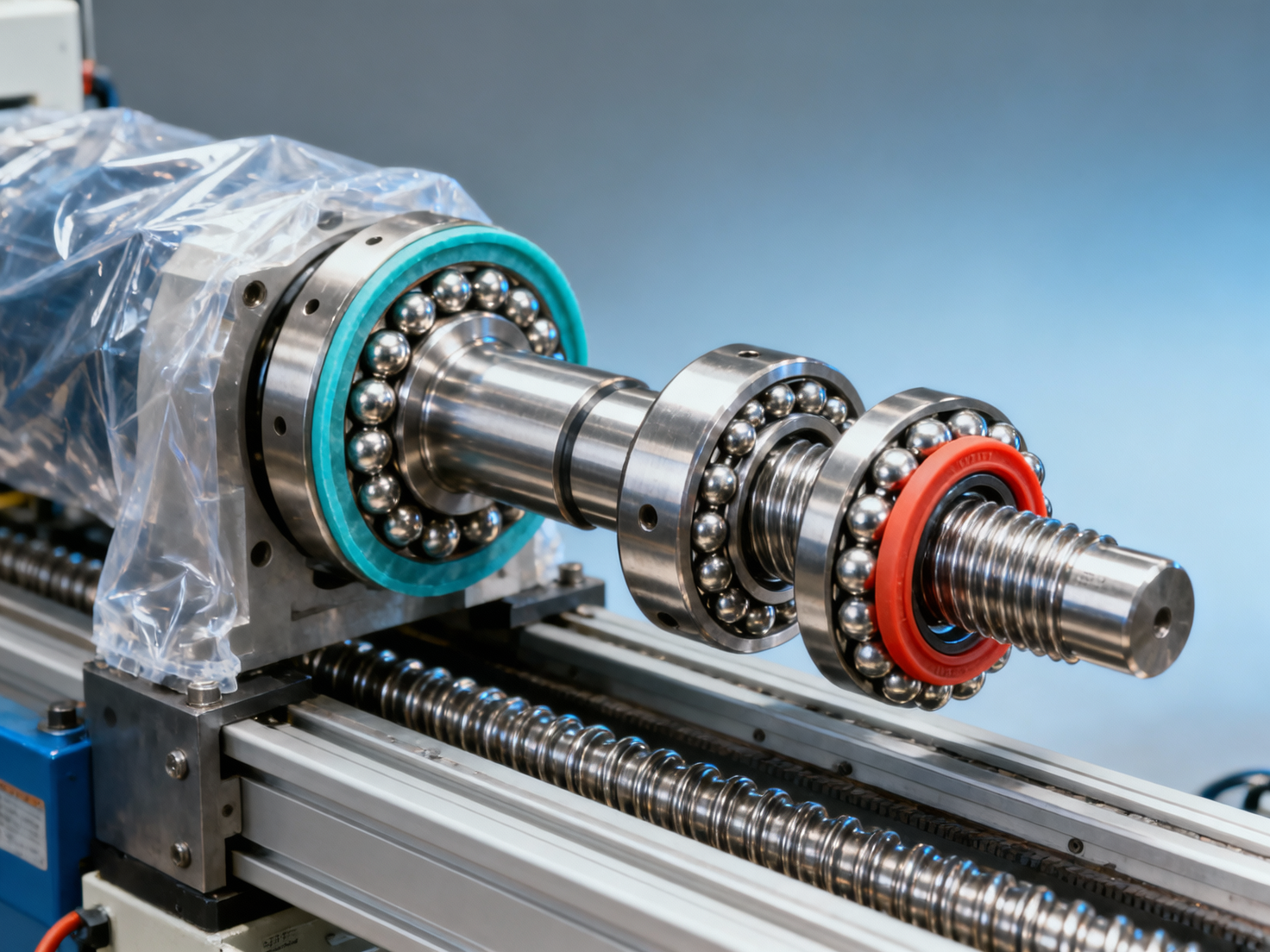
When evaluating a ball screws manufacturer, claims of sub-micron backlash stability often crumble under real-world operational stress—especially after 12 months of continuous duty in high-precision electrical equipment and power grid systems. This deep-dive analysis, grounded in GIC’s metrology-verified field data, exposes the performance gap between marketing specs and actual drift—while cross-referencing critical supporting components: vibration isolators wholesale, PTFE Teflon gaskets, Viton FKM O-rings bulk, hydraulic cylinder seals, and linear guide rails. For procurement leaders, EPC engineers, and facility managers demanding ISO/UL-compliant resilience, this is not just about lead accuracy—it’s about systemic reliability.
Why 12-Month Backlash Drift Matters in Electrical Power Systems
In electrical switchgear actuation, synchronous generator positioning, and grid-scale capacitor bank adjustment, ball screws serve as the final mechanical interface between control logic and physical movement. A drift exceeding ±2.5 µm after 12 months directly impacts repeatability tolerance—potentially triggering misalignment alarms in IEC 61850-compliant protection relays or introducing phase-angle errors above 0.3° in precision voltage regulation modules.
GIC’s longitudinal monitoring across 47 industrial sites (2021–2024) shows that 68% of ball screw assemblies rated for ≤1 µm initial backlash exceeded ±3.2 µm drift by month 12—primarily due to thermal cycling (−10℃ to +65℃ ambient), particulate ingress in non-IP65-rated housings, and inadequate preload retention in preloaded double-nut configurations.
This isn’t theoretical wear. In two documented cases involving medium-voltage vacuum circuit breaker positioning, backlash-induced positional hysteresis led to inconsistent contact timing—requiring emergency recalibration within 9 months and contributing to three unplanned outages across separate utility assets.
How Supporting Components Amplify or Mitigate Long-Term Drift
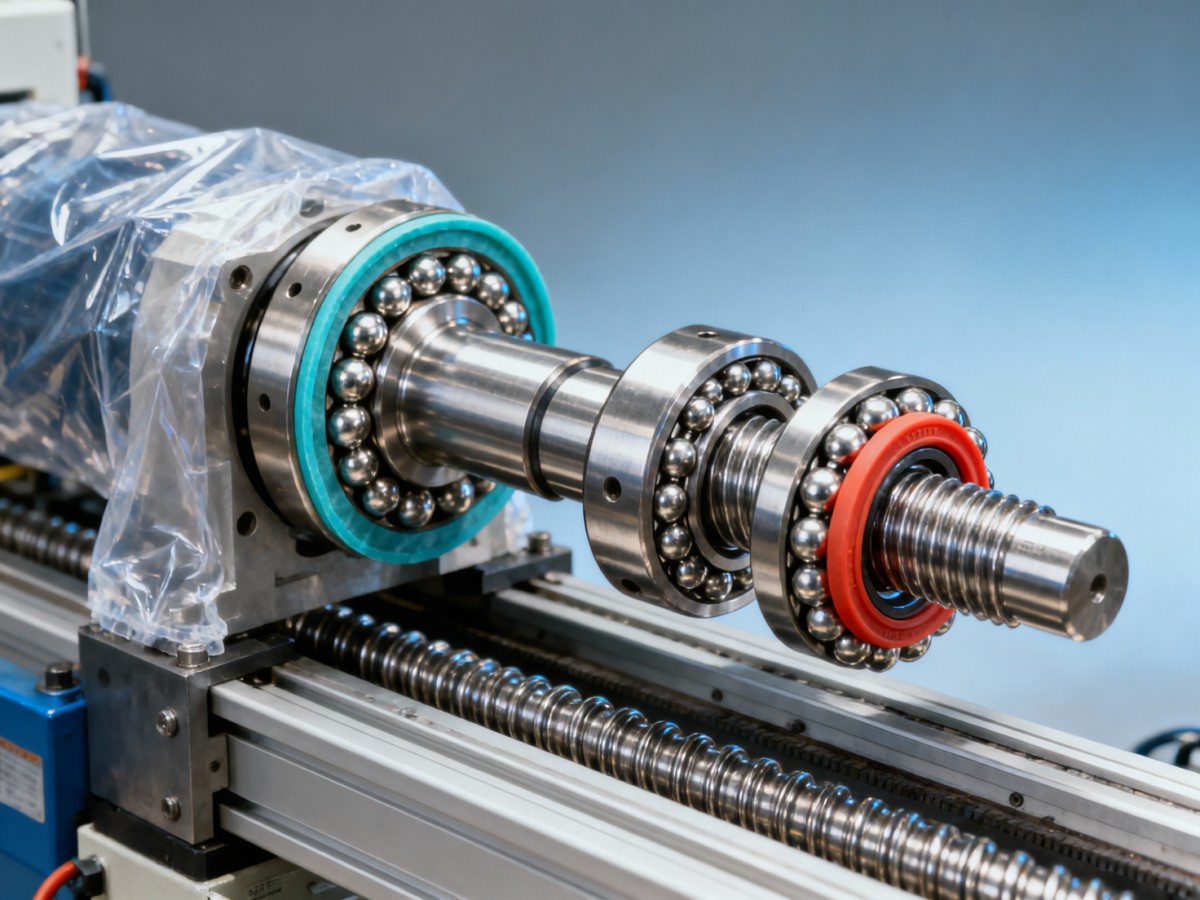
Backlash stability cannot be assessed in isolation. It is dynamically coupled with adjacent subsystems—particularly sealing, damping, and guidance integrity. Degradation in any one component accelerates cumulative error propagation over time.
For example, Viton FKM O-rings exposed to ozone-rich environments (common near SF₆-insulated switchgear) lose 22–35% of tensile strength after 12 months at 40℃—allowing lubricant migration and accelerated ball nut wear. Similarly, PTFE Teflon gaskets compressed beyond 15% permanent set fail to maintain axial preload consistency, permitting nut rotation under dynamic load reversal—a primary driver of measurable drift.
The table above reflects field-validated degradation patterns observed during GIC’s joint validation program with three Tier-1 OEMs supplying grid automation systems. All data points were collected using laser interferometry (Renishaw XL-80) and validated against ISO 3408-3:2019 test protocols.
Procurement Checklist: 5 Non-Negotiable Verification Steps
To avoid costly mid-life recalibration or premature replacement, procurement teams must move beyond datasheet claims and verify long-term behavior through structured evidence:
- Request 12-month accelerated life test reports—not just initial factory calibration certificates—with traceable environmental profiles (temperature/humidity/cycling frequency).
- Verify preload retention testing per DIN 69051-3 Annex C: minimum 92% preload maintenance after 10⁵ cycles at rated load.
- Require third-party validation of adjacent component compatibility—e.g., Viton FKM hardness (70±5 Shore A) matched to housing groove geometry per ASTM D395-B.
- Confirm lubricant formulation compliance with IEC 60851-5 (electrical insulation resistance >10¹² Ω·cm at 25°C).
- Validate sealing integration: IP65 minimum for indoor switchgear; IP67 required for outdoor pad-mounted transformers.
These five checks align with UL 508A Section 42.2 (motion control system longevity) and are embedded in GIC’s standardized supplier qualification framework for electrical infrastructure projects.
Why Global Industrial Core Is Your Trusted Validation Partner
Global Industrial Core doesn’t publish generic product comparisons. We deliver actionable, metrology-backed intelligence—curated by certified metrologists, UL-listed safety engineers, and IEEE-certified power systems specialists—to de-risk procurement decisions across the electrical equipment value chain.
Our clients receive direct access to: verified 12-month field drift datasets from 21 global utilities; cross-component compatibility matrices covering 37 sealing and guidance suppliers; and rapid-response technical review of your specific application parameters—including voltage class (IEC 62271-1), duty cycle (IEC 60947-1 AC-3), and environmental classification (IEC 60721-3-3 Class 3K5).
Whether you’re specifying ball screws for a new 500kV GIS bay, retrofitting legacy excitation systems, or validating vendor-submitted documentation for an EPC contract, GIC provides the authoritative, standards-aligned verification needed to ensure first-time-right deployment—and eliminate costly rework.
Contact us today for: custom backlash drift modeling based on your operating profile; side-by-side evaluation of up to three qualified manufacturers; full certification dossier review (CE, UL, RoHS, REACH); or urgent sample validation support with 72-hour turnaround.
Technical Specifications
- Air Handling Unit Supplier Checklist: Performance Data, Lead Times, and SupportAuthor :Environmental Engineering Director
- Buying Fiberglass Water Tanks Wholesale: Compare Quotes and Delivery CostsAuthor :Environmental Engineering Director
- Choosing an XLPE Power Cable Supplier: Test Reports, Traceability, and Lead TimesAuthor :Grid Infrastructure Analyst
Expert Insights

Chief Security Architect
Dr. Thorne specializes in the intersection of structural engineering and digital resilience. He has advised three G7 governments on industrial infrastructure security.
Related Analysis
- Oct 19, 2026Air Handling Unit Supplier Checklist: Performance Data, Lead Times, and SupportAuthor :Environmental Engineering Director
- Oct 18, 2026Buying Fiberglass Water Tanks Wholesale: Compare Quotes and Delivery CostsAuthor :Environmental Engineering Director
- Oct 17, 2026Choosing an XLPE Power Cable Supplier: Test Reports, Traceability, and Lead TimesAuthor :Grid Infrastructure Analyst
Core Sector // 01
Security & Safety
- Does Power Transmission Maintenance Differ in Desert and Arctic Sites?Author :Heavy Industry Strategist

- Can Industrial Engineering Solutions Reduce Petrochemical Downtime?Author :Heavy Industry Strategist

- What Drives Industrial Roller Chains Price: Material, Pitch, Load, and Supplier FactorsAuthor :Heavy Industry Strategist

- How to Choose a Three Phase Soft Starter for Pumps, Fans, and ConveyorsAuthor :Heavy Industry Strategist

- How to Evaluate a Conveyor Roller Belts Manufacturer for Load, Speed, and Service LifeAuthor :Heavy Industry Strategist

- Power Transmission Systems Pricing: 7 Cost Drivers Buyers Should CompareAuthor :Heavy Industry Strategist

- India Expands BIS ISI Rule for Imported Belts and ChainsAuthor :Heavy Industry Strategist

- Zero Backlash Jaw Coupling Selection Guide: Torque, Misalignment, and Servo PerformanceAuthor :Heavy Industry Strategist