Hazmat storage cabinets: what fire rating labels actually mean
Author
Date Published
Reading Time
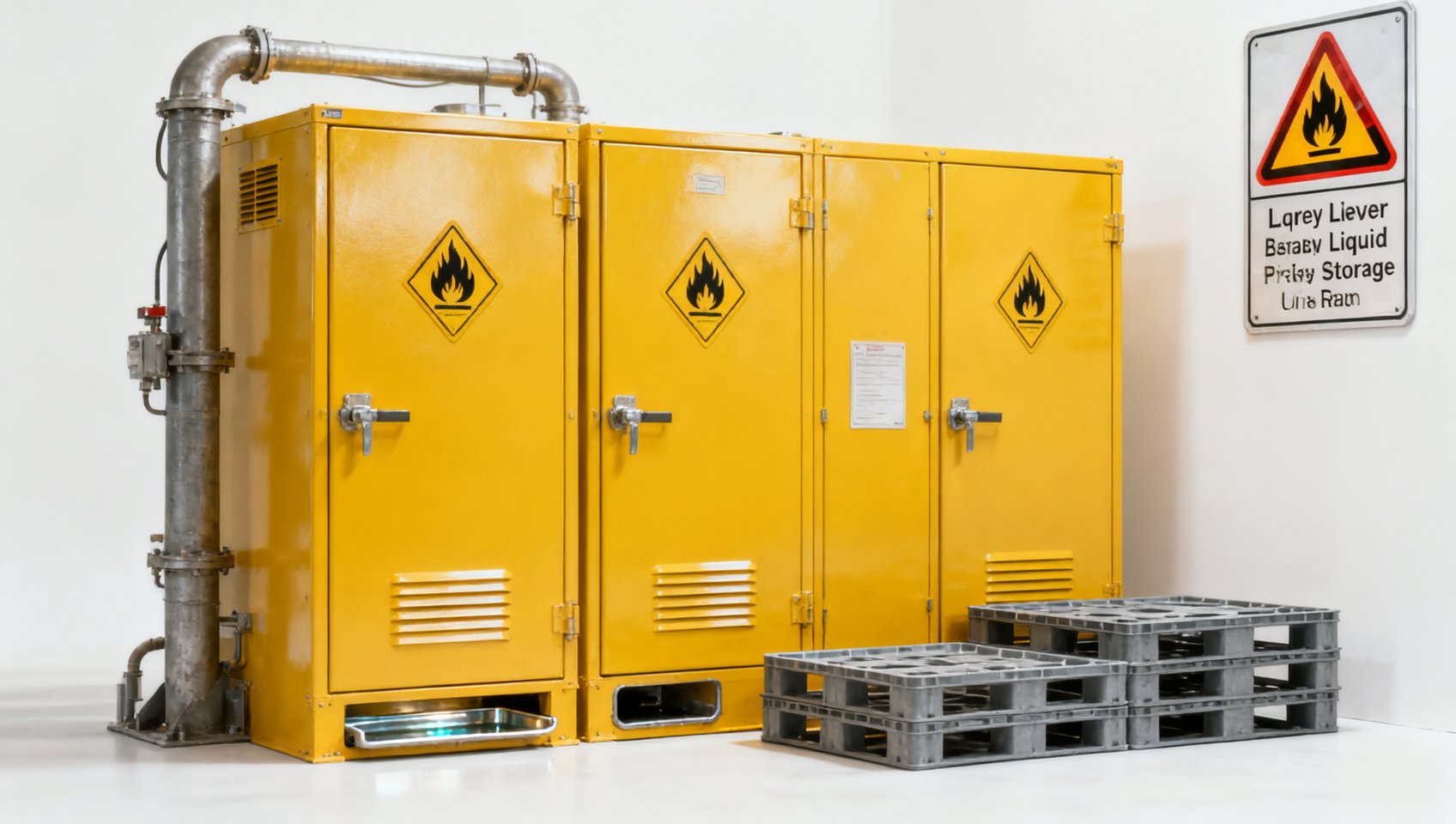
When evaluating hazmat storage cabinets, many buyers assume a fire rating label guarantees a specific burn time—but the reality is more nuanced. This guide explains what those labels actually mean, how hazmat storage cabinets relate to standards, testing, and workplace risk control, and what procurement teams should verify before comparing spill containment pallets, custom warning labels, or broader safety signs wholesale solutions.
What do fire rating labels on hazmat storage cabinets actually indicate?
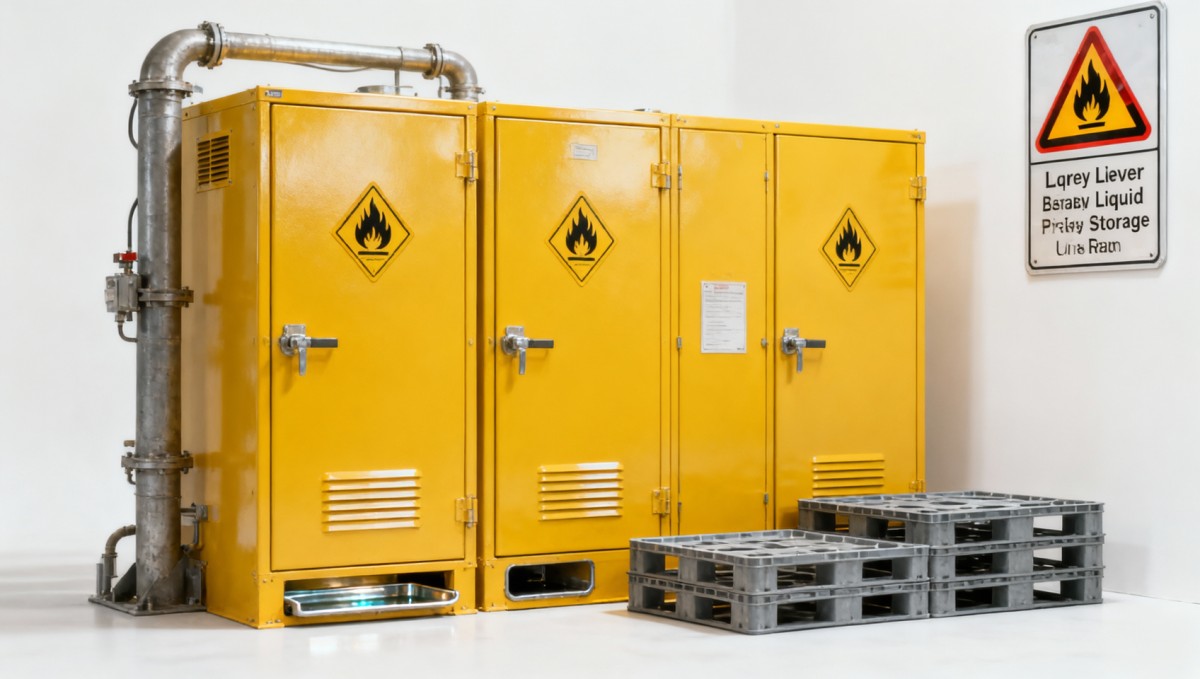
In industrial safety procurement, a fire rating label on a hazardous materials cabinet is often treated as a simple pass-or-fail signal. That is risky. In practice, the label usually reflects compliance with a specific test method, construction standard, or product category rather than a universal promise that contents will remain protected for 30, 60, or 90 minutes in every fire scenario.
For users, operators, and facility managers, the key distinction is between a cabinet designed for safer storage of flammable liquids and a true fire-resistive enclosure certified for a defined duration under a particular standard. These are not interchangeable. A hazmat storage cabinet may reduce ignition risk, support segregation, and improve spill control, yet still not function like a dedicated fire-rated room or vault.
Most industrial buyers need to check at least 4 elements before relying on label language: the exact standard cited, the product category covered, the test conditions, and any documented installation limitations. Without these 4 checks, labels such as “fire resistant,” “safety cabinet,” or “complies with code” can be interpreted too broadly during sourcing decisions.
This matters across chemical processing, maintenance workshops, laboratories, power facilities, and EPC project sites. A cabinet positioned near heat sources, forklift traffic, or incompatible chemicals faces very different risks from one placed in a controlled storage room. The label is only one input in a wider risk-control strategy.
Why confusion happens so often
Confusion usually comes from marketing language, inconsistent regional terminology, and the fact that buyers compare cabinets across multiple suppliers in 7–15 day tender windows. Under time pressure, teams may focus on external labels, paint color, locking method, or list price while missing deeper technical differences in wall construction, sump capacity, ventilation openings, and standard references.
Another issue is that many workplaces procure related items together: hazmat storage cabinets, spill containment pallets, safety signs, absorbents, and custom warning labels. Bundled sourcing is efficient, but it can encourage assumptions that all safety products follow the same certification logic. Cabinets do not. Their suitability depends on chemical class, storage volume, ambient conditions, and local code interpretation.
A practical reading rule
If the label does not clearly state the standard, scope, and test basis, do not interpret it as a guaranteed fire duration. Treat it as a prompt for document review. For procurement teams, that means requesting test summaries, construction details, operating instructions, and compatibility notes before approving the cabinet for solvent, paint, aerosol, or corrosive storage.
- Confirm whether the cabinet is intended for flammable liquids, corrosives, pesticides, gas cylinders, or mixed hazardous materials.
- Check whether the supplier references a recognized standard such as OSHA-related guidance, NFPA practices, FM approval pathways, UL-related components, or EN-based cabinet testing where applicable.
- Ask whether the stated fire rating applies to the cabinet body, the doors, the full assembly, or a broader storage solution.
Which standards and testing references should buyers compare?
Industrial buyers should compare standards carefully because not all references serve the same purpose. Some standards define cabinet construction requirements, some describe fire endurance testing, and some outline workplace storage practices. A product that aligns with one document may not automatically satisfy another. This is why a standards review should be built into any procurement process lasting 2–4 weeks.
In many projects, a cabinet selection sits at the intersection of corporate EHS policy, local fire code, insurer requirements, and end-user workflow. That means procurement teams should evaluate both compliance and actual operating conditions. A compliant cabinet that is difficult to inspect, overfilled, or placed near exits can still create operational risk.
The table below helps distinguish common reference points used in the market. It does not replace a site-specific code review, but it can prevent the most frequent sourcing error: assuming every standards mention equals the same level of fire performance.
The practical takeaway is simple: a standards citation only becomes useful when tied to a document set. Ask for the declaration of conformity if relevant, test evidence if available, installation instructions, and product drawings. If those documents are missing, the label should carry less weight in comparative evaluation.
Questions procurement teams should ask in every RFQ
A strong RFQ for hazmat storage cabinets should include 5 key checkpoints. First, identify the chemical family and container sizes. Second, define expected storage quantity, such as 20 L cans, 200 L drums, or mixed small packs. Third, request standard references and test basis. Fourth, specify whether spill containment pallets or signage are part of the same package. Fifth, confirm delivery, documentation, and after-sales support.
- List the intended liquids and their hazard categories rather than using the broad word “chemical.”
- State whether the cabinet must integrate with secondary containment, lockout procedures, or facility labeling systems.
- Request evidence of compatibility with site temperature ranges, for example indoor ambient conditions or non-conditioned warehouses.
At Global Industrial Core, this standards-first sourcing view is especially useful for cross-border procurement. Buyers comparing multiple regions often face mixed references to CE, UL, ISO-related management systems, and local fire rules. A structured document review reduces the chance of selecting a cabinet that looks compliant but fails local acceptance.
How should users match hazmat storage cabinets to real operating scenarios?
A cabinet that works in a laboratory may be a poor fit for a fabrication shop or a remote project site. Real selection should start with the operating scenario, not shelf count alone. In most industrial environments, there are at least 3 layers to assess: the material hazard, the handling pattern, and the surrounding environment. Fire label interpretation only makes sense after these 3 layers are defined.
For operators, day-to-day usability matters as much as compliance. If self-closing doors are constantly blocked open, if vent ports are modified without review, or if incompatible liquids are stored together to save floor space, then even a well-built cabinet can become part of the problem rather than the solution.
The following comparison table can help teams connect cabinet type, common scenario, and procurement priority. It is especially useful when a buyer is sourcing a broader safety package that may also include spill containment pallets and custom warning labels for segregated storage zones.
This scenario lens also helps explain why one buyer prioritizes a 30-minute tested enclosure while another accepts a compliant flammable storage cabinet with strong procedural controls around it. The correct answer depends on the quantity stored, the ignition sources present, response time, occupancy profile, and local code framework.
Operational mistakes that often undermine cabinet safety
Many avoidable failures happen after installation. Typical examples include storing corrosives in cabinets intended for flammables, placing absorbents inside without reviewing compatibility, and exceeding shelf load ratings. Another issue is inspection neglect. A practical routine is monthly visual checks, quarterly housekeeping review, and documented reassessment whenever stored chemical types change.
- Do not mix fire risk control with incompatibility control. One cabinet may not safely handle both functions.
- Do not assume aftermarket warning labels solve a misapplied cabinet type. Labels support control; they do not redefine cabinet performance.
- Do not ignore floor loading, clearance, and door swing space, especially in retrofit rooms where every 50–100 mm matters.
When spill containment pallets should be specified alongside cabinets
If the storage plan includes drums, transfer points, or high-frequency decanting, secondary containment outside the cabinet may be necessary. Spill containment pallets and cabinet sumps serve related but different roles. One addresses broader leak capture and handling risk; the other addresses cabinet-contained drips and small internal releases. Procurement teams should not substitute one for the other without reviewing the whole process flow.
What should buyers compare beyond the fire label during supplier selection?
A disciplined procurement review compares at least 6 dimensions: cabinet type, standards basis, usable capacity, spill features, delivery scope, and documentation quality. The fire label belongs in that list, but it should not dominate it. For many industrial buyers, long-term usability, acceptance by internal safety teams, and integration into facility controls matter just as much as the label itself.
Lead time is another practical factor. Standard cabinet configurations may ship in 7–15 days depending on region and stock position, while project-specific modifications can require 2–6 weeks or longer. If the site also needs safety signs wholesale packages, custom warning labels, or matching spill pallets, coordinated delivery becomes part of the buying decision.
The checklist below is designed for procurement staff, EHS managers, and decision makers who need a repeatable way to compare offers without losing technical detail.
A 6-point cabinet evaluation checklist
- Define the stored substances by class, container size, and expected maximum quantity. This is the foundation of any compliant selection.
- Review the exact standards and any available test reports. If a fire duration is claimed, ask how it was established and whether it applies to the full assembly.
- Check construction details such as wall design, shelf adjustment, sump capacity, closure mechanism, and lock compatibility with site access control.
- Confirm installation conditions, including room ventilation concept, floor levelness, door clearance, and nearby ignition sources.
- Evaluate documentation quality: manuals, labels, maintenance guidance, and parts support should be included before PO release.
- Coordinate related safety items such as spill pallets, hazard communication labels, and zone signs so the storage control system is complete on day one.
This approach helps buyers avoid false economies. A cheaper cabinet that lacks usable documentation, arrives without the right labeling, or fails internal approval can delay commissioning and create rework costs. In heavy industry, indirect costs often exceed the initial unit-price gap.
Common misconceptions during price comparison
The first misconception is that thicker steel automatically means better fire protection. Construction quality matters, but performance depends on the whole design and any relevant testing basis. The second is that the highest stated fire duration is always the best choice. In reality, over-specification can increase cost and footprint without improving site risk control if quantities are small and procedures are strong.
The third misconception is that all accessories are optional. In many facilities, grounding provisions, shelf liners, external signage, and nearby spill response tools are part of practical compliance. A cabinet is not an isolated purchase. It belongs to a storage ecosystem.
FAQ: fire ratings, compliance, and implementation details
Because hazmat storage cabinets sit at the intersection of compliance, operations, and procurement, buyers often ask the same implementation questions. The answers below are framed for information researchers, users, and decision makers who need clear distinctions without oversimplifying the standards landscape.
Does a fire rating label mean the cabinet will protect chemicals for the full stated time in any fire?
No. A stated duration such as 30, 60, or 90 minutes only has meaning when linked to a defined test method and specimen configuration. Real fires vary by ventilation, fuel load, placement, and emergency response timing. Treat the label as evidence within a documented scope, not as a universal guarantee for every industrial environment.
Can one cabinet be used for flammables and corrosives at the same time?
Usually this should be approached with caution. Even if physical space is limited, mixed storage raises compatibility and incident-response issues. Separate cabinets or clearly segregated storage plans are often preferred. The right decision depends on chemical compatibility, quantity thresholds, and site procedures. A quick space-saving decision can create a long-term safety problem.
How often should hazmat storage cabinets be inspected?
A common baseline is monthly visual inspection and quarterly documented review, with immediate reassessment after spills, impact damage, or changes in stored substances. Teams should verify door function, sump cleanliness, corrosion, labeling condition, and container housekeeping. Where usage is high, weekly operator checks may be reasonable.
What documents should be requested before approving a purchase?
Ask for product datasheets, dimensional drawings, installation instructions, maintenance guidance, standard references, and any available test documentation relevant to the fire rating or cabinet construction claim. If the project includes spill containment pallets or custom warning labels, request a coordinated item list so all storage-control components arrive aligned.
Why work with a technical sourcing partner for cabinet selection and compliance review?
For industrial procurement teams, the real challenge is rarely finding a cabinet supplier. The challenge is selecting the right hazardous storage solution under time pressure, mixed standards references, and site-specific risk conditions. That is where a technical sourcing partner adds value: by turning scattered product claims into a decision framework grounded in application, documentation, and implementation reality.
Global Industrial Core supports buyers across safety and infrastructure categories where failure has operational consequences. For hazmat storage cabinets, that means helping teams compare standard references, clarify what fire rating labels actually mean, align cabinet selection with spill control strategy, and identify when related products such as spill containment pallets, safety signs wholesale packages, or custom warning labels should be sourced together.
If your team is evaluating a new project, a retrofit, or a multi-site supply program, the most useful first step is a structured requirements review. In many cases, 3 decisions determine the whole package: what is being stored, where it will be used, and which compliance pathway the site must satisfy. Once those 3 points are clear, product comparison becomes faster and less error-prone.
What you can discuss with us
- Parameter confirmation for cabinet size, capacity, sump requirements, and space constraints in existing rooms or project layouts.
- Product selection support for flammable storage cabinets, corrosive storage options, and matching spill containment pallets.
- Review of certification and standards references so your team can distinguish construction compliance from true fire-duration claims.
- Delivery planning, documentation requirements, sample support for labels or signs, and quotation alignment for multi-item safety procurement.
If you are comparing hazmat storage cabinets now, contact Global Industrial Core with your chemical list, target quantities, installation scenario, and any required standards references. We can help you narrow cabinet options, identify documentation gaps, coordinate related safety products, and support a more defensible purchasing decision before RFQ finalization.
Technical Specifications
- SCFI Surges 27% Weekly; Shanghai–Rotterdam Freight Hits $4,200/TEUAuthor :Environmental Engineering Director
- INMETRO New Rule: Industrial Circuit Breakers Must Pass IEC 60947-2 Annex Q Test from Sep 2026Author :Grid Infrastructure Analyst
- FDA Expands Regulation of Industrial Air Filters: ULPA Filter MVR Verification RequiredAuthor :Environmental Engineering Director
Expert Insights

Chief Security Architect
Dr. Thorne specializes in the intersection of structural engineering and digital resilience. He has advised three G7 governments on industrial infrastructure security.
Related Analysis
- Apr 26, 2026SCFI Surges 27% Weekly; Shanghai–Rotterdam Freight Hits $4,200/TEUAuthor :Environmental Engineering Director
- Apr 26, 2026INMETRO New Rule: Industrial Circuit Breakers Must Pass IEC 60947-2 Annex Q Test from Sep 2026Author :Grid Infrastructure Analyst
- Apr 26, 2026FDA Expands Regulation of Industrial Air Filters: ULPA Filter MVR Verification RequiredAuthor :Environmental Engineering Director
Core Sector // 01
Security & Safety
- Hidden fire risks in electrical safety panelsAuthor :Safety Compliance Lead

- Defibrillator AED wholesale: battery dates matter more than priceAuthor :Safety Compliance Lead

- What makes one stretcher bed manufacturer easier to trustAuthor :Safety Compliance Lead

- Wholesale rescue tripods: aluminum or steel for field use?Author :Safety Compliance Lead

- Confined space equipment mistakes that raise rescue timeAuthor :Safety Compliance Lead

- Hazmat storage cabinets: what fire rating labels actually meanAuthor :Safety Compliance Lead

- AED defibrillators wholesale often ship without verified battery charge cycles—why ‘fresh’ units may already be two years oldAuthor :Safety Compliance Lead

- Stretcher beds from manufacturers skip dynamic load testing—how static weight ratings misrepresent real patient transport stressAuthor :Safety Compliance Lead