Fixing cable heat issues in power distribution
Author
Date Published
Reading Time
- environmental engineering
- heavy industry
- EPC contractors
- industrial procurement
- safety compliance
- electrical infrastructure
- facility management
- industrial standards
- engineering procurement
- industrial resilience
- safety equipment
- power distribution
- mechanical engineering
- electrical safety
- metallurgical engineering
In the realm of Electrical & Power, addressing cable heat issues in power distribution is a mission-critical priority for facility management and mechanical engineering teams. Overheating poses severe risks to electrical safety and operational resilience, demanding strict adherence to international industrial standards. As part of our commitment to Security & Safety, this guide provides technical insights for metallurgical engineering specialists and safety managers to mitigate thermal failure. By integrating advanced safety equipment and rigorous environmental engineering principles, project managers can ensure long-term reliability. Global Industrial Core delivers the E-E-A-T-aligned intelligence necessary for technical evaluators and decision-makers to safeguard their infrastructural foundations against costly downtime.
Identifying the Core Drivers of Thermal Stress in Industrial Cable Networks
Thermal management in heavy industrial power distribution is not merely a matter of cooling; it is a fundamental engineering challenge that dictates the lifespan of an entire facility's electrical backbone. When electrical current flows through a conductor, it naturally encounters resistance, resulting in heat generation according to the I²R law. In complex industrial environments, this heat can accumulate rapidly if the system is not designed to dissipate thermal energy effectively. For project managers and facility directors, recognizing that even a 10°C increase above the rated operating temperature can halve the expected life of cable insulation is crucial for maintaining operational uptime.
Beyond basic resistive heating, the phenomenon of skin effect in high-frequency applications and the presence of non-linear loads contribute significantly to localized hot spots. Modern industrial plants often utilize Variable Frequency Drives (VFDs) and heavy-duty motors that introduce harmonics into the system. These harmonics increase the effective resistance of the cabling, leading to heat levels that exceed the original design specifications. Technical evaluators must therefore look beyond the nominal current ratings and assess the total harmonic distortion (THD) to accurately predict thermal behavior in real-world operating conditions.
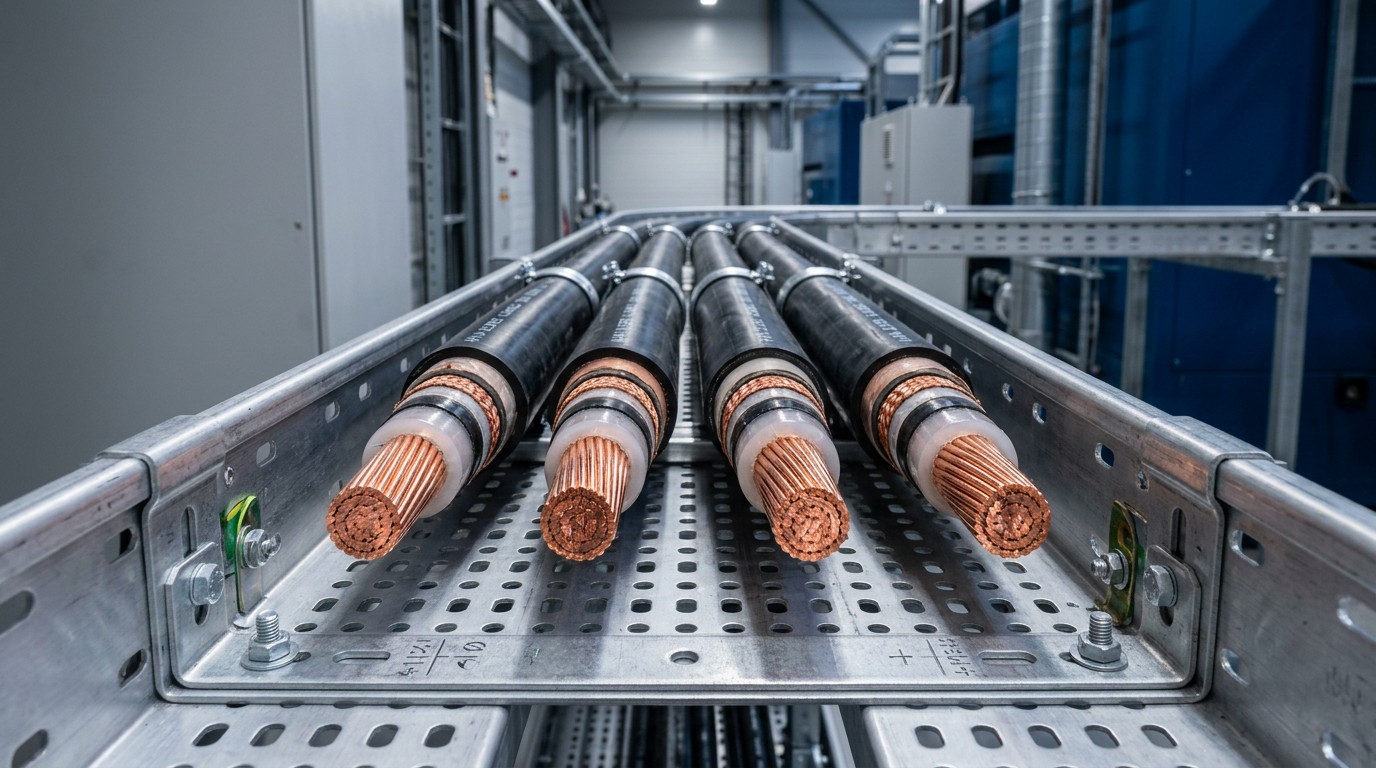
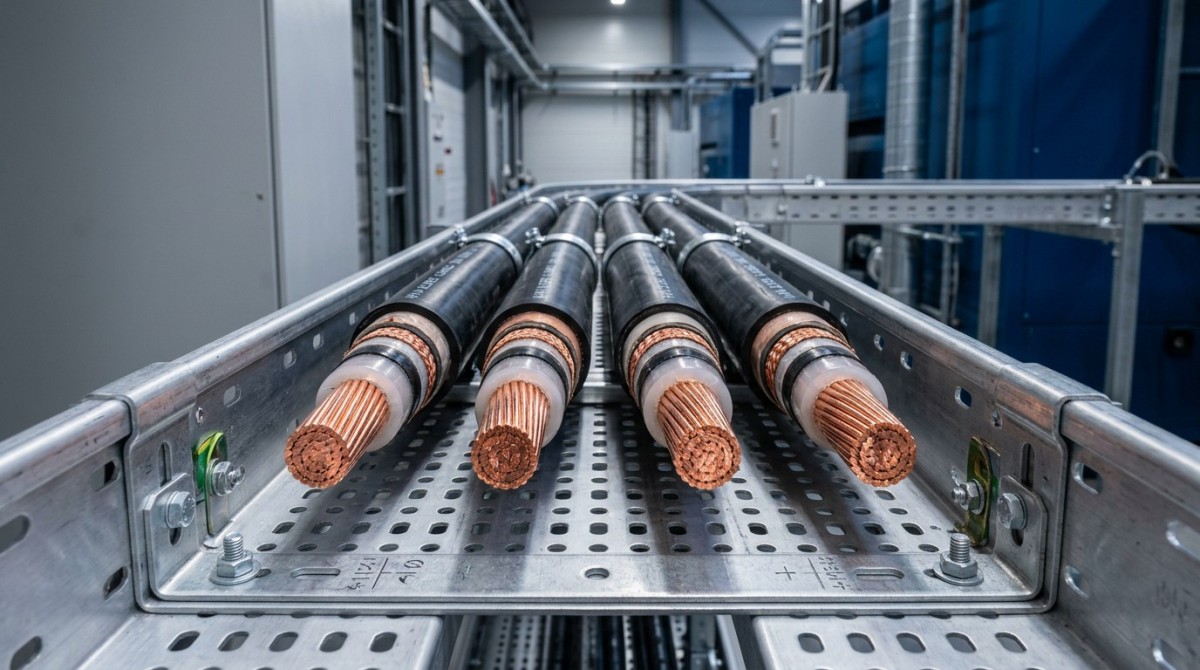
Environmental factors also play a decisive role in the thermal performance of power distribution systems. Cables installed in poorly ventilated conduits, underground banks with high soil thermal resistivity, or areas adjacent to high-heat process equipment are particularly vulnerable. A common oversight in engineering procurement is failing to account for the "mutual heating" effect, where multiple cables bundled together in a single tray or ladder restrict airflow. This lack of ventilation creates a cumulative heat trap, necessitating a significant derating of the cable's current-carrying capacity to prevent catastrophic insulation failure.
Strategic sourcing teams and safety compliance leads must prioritize high-quality insulation materials that offer superior thermal stability. For instance, Cross-linked Polyethylene (XLPE) has become the industry standard for its ability to withstand continuous operating temperatures of up to 90°C and emergency overload temperatures of 130°C. By understanding these technical nuances, procurement directors can move beyond basic unit economics and focus on selecting components that offer long-term resilience against thermal degradation and the high costs associated with emergency infrastructure replacement.
Technical Performance Metrics: Evaluating Insulation and Conductor Integrity
When assessing the risk of heat-induced failure, technical evaluators must utilize a framework based on established international standards, such as IEC 60287. This standard provides the formulas necessary to calculate the continuous current rating of cables under various installation conditions. A critical metric for any facility manager is the "derating factor," which adjusts the cable’s capacity based on ambient temperature and installation density. For example, a cable rated for 100A in free air may only be safe for 70A–80A when installed in a buried duct bank, depending on the specific environmental thermal resistance of the surrounding soil.
The table below illustrates the comparative thermal performance of common insulation materials used in industrial power distribution, providing a baseline for material selection and safety assessment during the procurement phase.
The data presented above highlights why XLPE is favored in modern infrastructure projects. While PVC is cost-effective, its lower thermal threshold makes it unsuitable for heavy-duty distribution where current surges or high ambient temperatures are expected. For specialized applications such as metallurgy or chemical processing, upgrading to EPR or Silicone Rubber may be necessary to ensure that the cabling does not become a point of failure. Decision-makers must weigh the initial capital expenditure against the potential 15–20 year operational lifespan of these high-performance materials.
Another critical technical factor is the quality of the conductor itself. Impurities in copper or aluminum can increase resistance by 2%–5%, leading to higher heat generation at the same load levels. Global Industrial Core advocates for the procurement of conductors that meet Class 2 or Class 5 flexibility standards while maintaining 99.9% purity. High-purity conductors not only reduce heat generation but also improve the efficiency of the entire power grid, contributing to lower energy costs and a reduced carbon footprint for the industrial facility.
Strategic Procurement and Selection Framework for Facility Managers
For procurement directors and EPC contractors, selecting the right cable involves a balance of technical compliance and budgetary constraints. However, "underrating" a cable to save on initial material costs is one of the most common causes of long-term infrastructural failure. A robust selection framework should begin with a detailed load analysis, accounting for a 20%–25% future expansion margin. This ensures that as production capacity increases, the existing electrical infrastructure can handle the additional thermal load without requiring immediate and costly upgrades.
Technical evaluators should also pay close attention to the cable's physical construction, particularly in harsh environments. Armored cables (SWA/AWA) provide mechanical protection but can also influence heat dissipation. In single-core applications, the use of aluminum armor is essential to prevent circulating currents and eddy current heating, which can occur in magnetic steel armor. These subtle engineering details are often overlooked during the bidding process but are vital for ensuring the safety and reliability of high-amperage power circuits.
To assist in the decision-making process, we have outlined a 4-step procurement checklist designed to mitigate thermal risks before equipment even arrives on site. This checklist aligns with international quality management standards and ensures that all stakeholders are focused on mission-critical safety parameters.
- Step 1: Thermal Environment Audit: Measure the maximum ambient temperature and soil thermal resistivity at the installation site.
- Step 2: Ampacity Verification: Calculate the required current-carrying capacity using derating factors for bundling, burial depth, and air flow.
- Step 3: Certification Check: Verify that cables carry CE, UL, or ISO certifications and have been tested for thermal aging.
- Step 4: Quality Control Inspection: Perform resistance testing on samples to ensure conductor purity meets the specified standards (±0.5% tolerance).
By following this structured approach, project managers can eliminate the ambiguity that often surrounds cable selection. Furthermore, maintaining a 3-month to 6-month lead time for specialized high-temperature cables is recommended to avoid last-minute substitutions that might compromise the technical integrity of the system. Proactive procurement is the foundation of a resilient electrical grid, protecting both personnel and high-value machinery from the dangers of electrical fires and insulation breakdown.
Maintenance Protocols and Predictive Thermal Monitoring
Even the most perfectly designed system requires ongoing maintenance to manage heat issues over its operational lifecycle. In heavy industry, loose connections are a primary source of localized heating. A single loose terminal can create high resistance, leading to temperatures exceeding 200°C within minutes, which can ignite surrounding materials. Implementing a quarterly thermographic inspection schedule using Infrared (IR) cameras allows facility operators to detect these "invisible" hazards long before they trigger a circuit breaker or cause a fire.
Modern predictive maintenance strategies now integrate IoT-enabled temperature sensors directly into cable terminations and switchgear. These sensors provide real-time data to a central management system, alerting safety officers if temperatures cross a predefined 75°C or 85°C threshold. This data-driven approach shifts the maintenance paradigm from reactive—fixing things after they fail—to proactive, allowing for scheduled repairs during planned downtime rather than emergency shutdowns that can cost upwards of $50,000 per hour in lost production.
The table below summarizes the typical maintenance intervals and corrective actions for managing thermal health in industrial power distribution systems, providing a roadmap for safety compliance leads and operational managers.
A thorough interpretation of these maintenance cycles reveals that thermal management is an ongoing commitment to safety. For example, insulation resistance testing (meggering) is essential because heat over time changes the chemical structure of the polymers, making them brittle and prone to cracking. Once the insulation fails, the resulting short circuit can cause catastrophic damage. By institutionalizing these checks, project leaders ensure that their electrical infrastructure remains a reliable asset rather than a liability.
Frequently Asked Questions: Industrial Cable Heat Management
How does ambient temperature specifically impact cable selection for outdoor installations?
In outdoor environments, particularly in tropical regions or high-altitude industrial sites, ambient temperatures can frequently exceed 40°C. Standard cable ratings are often based on a 30°C baseline. For every 5°C increase above this baseline, a derating factor of approximately 0.85 to 0.91 must be applied. Failure to account for solar gain on exposed cable trays can lead to surface temperatures that exceed 60°C, causing the insulation to degrade 2–3 times faster than its designed rate. Technical evaluators should specify UV-stabilized jackets and consider sunshades for critical outdoor feeders to mitigate this effect.
Can bundling too many cables together in a single conduit cause a fire?
Yes, bundling is a high-risk practice if not managed through proper engineering calculations. When cables are packed tightly, the heat generated by each conductor is absorbed by the neighboring ones, creating a thermal feedback loop. International standards like the NEC (National Electrical Code) require significant ampacity reductions—sometimes as much as 50%—when more than 20 current-carrying conductors are bundled together. Beyond the fire risk, excessive heat increases the resistance of the cables, leading to voltage drops that can damage sensitive industrial electronics and precision measurement instruments.
What are the most reliable indicators of impending thermal failure in power distribution?
The most reliable indicators include localized discoloration of the cable jacket, a distinct "ozone" or burning smell near switchgear, and visible sagging of cables in overhead trays. However, these are often late-stage symptoms. Early-stage indicators are best found through thermal imaging, where a temperature difference (delta-T) of 10°C–20°C between similar phases suggests an unbalanced load or a high-resistance connection. Furthermore, monitoring the power factor and harmonic levels can provide a leading indicator of thermal stress before any physical damage is visible to the naked eye.
Partnering for Industrial Resilience and Thermal Safety
Solving cable heat issues in power distribution requires a multidimensional approach that combines metallurgical expertise, electrical engineering precision, and rigorous safety compliance. At Global Industrial Core (GIC), we understand that for EPC contractors and facility managers, the stakes involve more than just technical specifications—they involve the continuity of global supply chains and the safety of thousands of personnel. Our mission is to provide the data-driven intelligence and strategic sourcing support needed to build systems that stand the test of time and extreme operational conditions.
By aligning with the E-E-A-T standards of our curated editorial framework, industrial partners can access verified technical whitepapers, real-world case studies, and compliance updates that are essential for modern infrastructural development. Whether you are conducting a technical evaluation of existing systems or planning a large-scale project expansion, our panel of safety compliance leads and environmental engineers is available to ensure your power distribution network meets the highest benchmarks for efficiency and thermal resilience.
We invite industrial procurement directors and project managers to consult with us for specialized support in infrastructure safety. Our team can assist with technical parameter confirmation, material selection for high-heat environments, and the verification of international certification requirements (CE, UL, ISO). Contact Global Industrial Core today to receive a customized technical assessment or to discuss your sourcing needs for mission-critical electrical components. Let us help you architect a foundation that is safe, efficient, and resilient against the challenges of modern industrial operations.
Technical Specifications
Expert Insights

Chief Security Architect
Dr. Thorne specializes in the intersection of structural engineering and digital resilience. He has advised three G7 governments on industrial infrastructure security.
Related Analysis
- Apr 25, 2026China Launches World's Largest Agri-Meteorological Observation NetworkAuthor :Precision Metrology Expert
- Apr 25, 2026Binggang Group & AHUT Advance Steel Slag Valorization TechAuthor :Heavy Industry Strategist
- Apr 25, 2026China Leads First ISO Standard for Zero-Carbon CitiesAuthor :Environmental Engineering Director
Core Sector // 01
Security & Safety
- Copper Price Surge Impacts Industrial Components BOM CostsAuthor :Grid Infrastructure Analyst
![]()
- Fixing cable heat issues in power distributionAuthor :Grid Infrastructure Analyst

- Copper Price Surges 6.8%: Impact on Cables, Breakers & BOM CostsAuthor :Grid Infrastructure Analyst
![]()
- CEE form plugs and sockets heat up at 80% load — is your pin plating thickness adequate?Author :Grid Infrastructure Analyst

- Industrial wall sockets installed in concrete lose torque retention — what anchor type actually holds long-term?Author :Grid Infrastructure Analyst

- Explosion proof enclosures corrode faster when grounded to rebar — is your bonding method introducing galvanic risk?Author :Grid Infrastructure Analyst

- Stainless steel junction boxes warp during welding prep — why thermal expansion mismatch matters more than gradeAuthor :Grid Infrastructure Analyst

- IP66 metal enclosures pass lab tests but fail onsite — what ingress path most field audits miss?Author :Grid Infrastructure Analyst