Copper Price Surge Impacts Electrical Equipment BOM Costs
Author
Date Published
Reading Time

Global copper prices rose 3.8% in a single day on April 25, 2026, driving up bill-of-materials (BOM) costs by 7.1% month-on-month for industrial circuit breakers, transformers, and power cables — key segments for global electrical equipment exporters and supply chain stakeholders.
Event Overview
On April 25, 2026, LME copper futures closed at $10,240 per metric ton — the highest level since 2023. Concurrently, electrolytic copper spot premium reached $280/ton, driven by escalating labor strikes in Chile and tightened export licensing in the Democratic Republic of the Congo. As a direct result, major Chinese exporters of cables & wiring, breakers & relays, and transformers & switchgears have issued new price notifications effective May 10, 2026.
Which Subsectors Are Affected
Direct Trade Enterprises
Export-oriented trading firms handling finished electrical equipment face immediate margin pressure due to announced price adjustments effective May 10. Since pricing is often negotiated quarterly or per shipment, unconfirmed orders booked before May 10 may now require renegotiation if delivery falls post-effective date.
Raw Material Procurement Entities
Procurement teams sourcing copper-based components — including busbars, windings, and conductor strands — are encountering higher spot premiums and tighter lead times. The $280/ton premium reflects not just scarcity but logistical friction, suggesting procurement cycles may lengthen even for confirmed contracts.
Manufacturing Enterprises
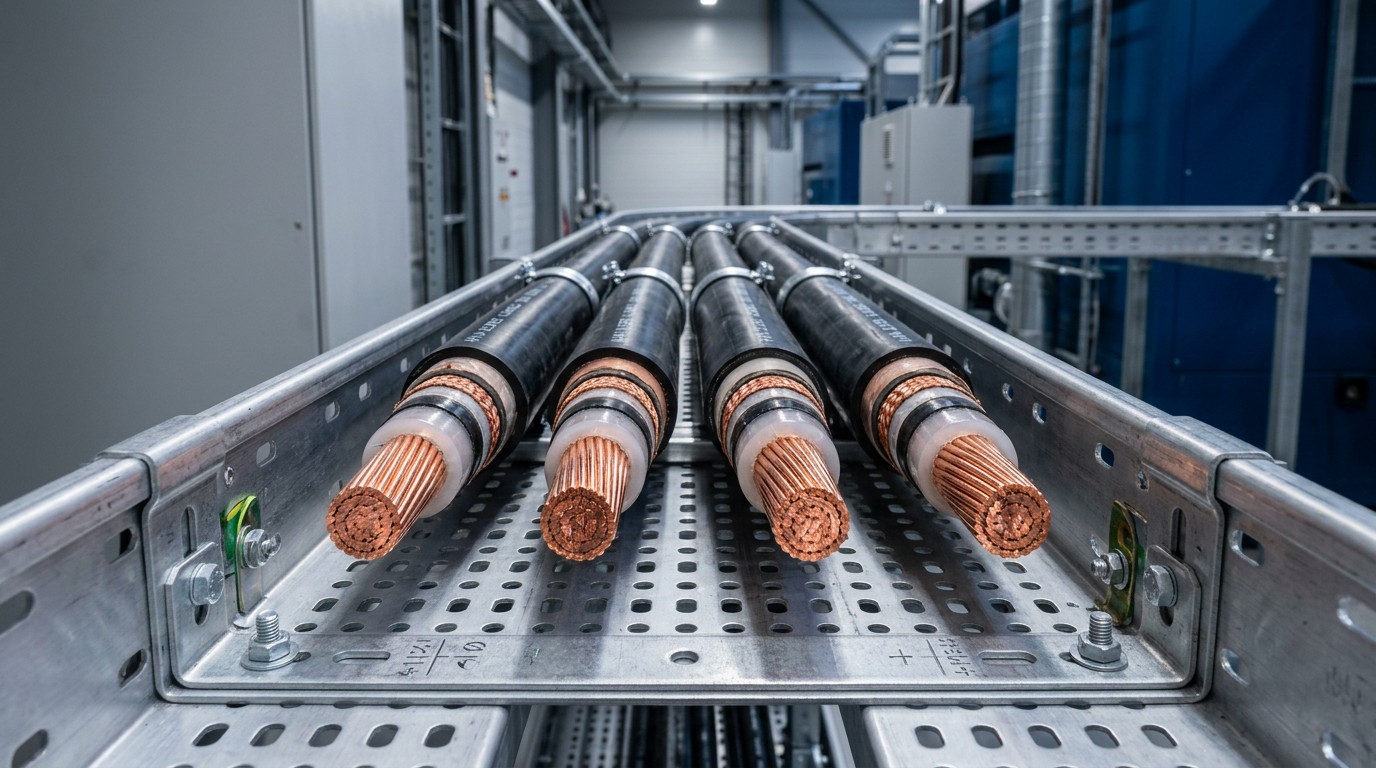
Original equipment manufacturers (OEMs) producing circuit breakers, distribution transformers, and medium-voltage cables see BOM cost increases averaging 7.1% month-on-month. This impacts gross margin calculations for open production schedules and may trigger internal cost-recovery reviews ahead of the May 10 pricing shift.
Supply Chain & Logistics Service Providers
Third-party logistics and customs brokerage firms supporting electrical equipment exports must anticipate revised commercial invoices, updated HS code classifications (where applicable), and potential delays in documentation clearance — particularly for shipments transiting through jurisdictions sensitive to raw material origin disclosures.
What Enterprises and Practitioners Should Monitor and Do Now
Track official export policy updates from DRC and Chile
Current export restrictions in the DRC and strike-related port disruptions in Chile remain fluid. Monitoring official statements — not just market rumors — is critical, as any formal extension or easing directly affects near-term copper availability and premium trends.
Review open purchase orders and delivery timelines against May 10 effective date
Manufacturers and traders should reconcile all active POs with scheduled shipment dates. Orders confirmed before April 25 but scheduled for delivery after May 10 may fall under new pricing terms — requiring proactive communication with buyers or suppliers to clarify liability for cost variance.
Distinguish between price notification and actual cost pass-through
The announced price adjustment reflects input cost pressure, but final realization depends on contract terms (e.g., fixed-price vs. index-linked). Analysis来看, many OEM contracts include copper price adjustment clauses with lag periods or caps — meaning full 7.1% BOM impact may not translate one-to-one into selling price changes.
Validate inventory valuation and hedge exposure for Q2 copper purchases
Finance and procurement teams should reassess current copper-based inventory carrying value under IFRS or local GAAP. For upcoming purchases, evaluating LME futures hedges (e.g., June–July 2026 contracts) may mitigate further upside risk — especially given the $10,240/ton benchmark now exceeding prior resistance levels.
Editorial Perspective / Industry Observation
From industry角度看, this copper surge is less a short-term volatility spike and more a structural signal: supply-side constraints — rooted in geopolitical licensing and labor dynamics — are now materially affecting midstream manufacturing economics. Observation来看, the 7.1% BOM increase is not isolated to raw copper metal but cascades across component tiers (e.g., laminated copper foil, tinned conductors), suggesting downstream cost recalibration will extend beyond headline announcements. Current更值得关注的是 whether this triggers broader repricing across adjacent non-ferrous metals (e.g., aluminum used in cable sheathing or transformer enclosures), which often follow copper’s lead with a lag.
It更适合理解为 a leading indicator of tightening upstream conditions rather than a self-contained event — one that tests responsiveness across procurement agility, contract design resilience, and cross-border compliance readiness.
Conclusion
This copper price movement signals measurable, near-term cost pressure across three core electrical equipment categories — cables & wiring, breakers & relays, and transformers & switchgears. Its significance lies not only in magnitude but in origin: it stems from tangible, geographically concentrated supply constraints, not speculative momentum. Stakeholders should treat it as an operational inflection point — prompting concrete review of contracts, inventory, and sourcing alternatives — rather than a transient market headline.
Information Sources
Main source: LME daily settlement data and publicly issued price notifications from Chinese electrical equipment exporters (effective May 10, 2026). Ongoing monitoring required for official export policy updates from Chilean National Copper Corporation (Codelco) and DRC Ministry of Mines.
Technical Specifications
- SCFI Surges 27% Weekly; Shanghai–Rotterdam Freight Hits $4,200/TEUAuthor :Environmental Engineering Director
- INMETRO New Rule: Industrial Circuit Breakers Must Pass IEC 60947-2 Annex Q Test from Sep 2026Author :Grid Infrastructure Analyst
- FDA Expands Regulation of Industrial Air Filters: ULPA Filter MVR Verification RequiredAuthor :Environmental Engineering Director
Expert Insights

Chief Security Architect
Dr. Thorne specializes in the intersection of structural engineering and digital resilience. He has advised three G7 governments on industrial infrastructure security.
Related Analysis
- Apr 26, 2026SCFI Surges 27% Weekly; Shanghai–Rotterdam Freight Hits $4,200/TEUAuthor :Environmental Engineering Director
- Apr 26, 2026INMETRO New Rule: Industrial Circuit Breakers Must Pass IEC 60947-2 Annex Q Test from Sep 2026Author :Grid Infrastructure Analyst
- Apr 26, 2026FDA Expands Regulation of Industrial Air Filters: ULPA Filter MVR Verification RequiredAuthor :Environmental Engineering Director
Core Sector // 01
Security & Safety
- Copper Price Surge Impacts Electrical Equipment BOM CostsAuthor :Grid Infrastructure Analyst
![]()
- Copper Price Surge Impacts Industrial Components BOM CostsAuthor :Grid Infrastructure Analyst
![]()
- Fixing cable heat issues in power distributionAuthor :Grid Infrastructure Analyst

- Copper Price Surges 6.8%: Impact on Cables, Breakers & BOM CostsAuthor :Grid Infrastructure Analyst
![]()
- CEE form plugs and sockets heat up at 80% load — is your pin plating thickness adequate?Author :Grid Infrastructure Analyst

- Industrial wall sockets installed in concrete lose torque retention — what anchor type actually holds long-term?Author :Grid Infrastructure Analyst

- Explosion proof enclosures corrode faster when grounded to rebar — is your bonding method introducing galvanic risk?Author :Grid Infrastructure Analyst

- Stainless steel junction boxes warp during welding prep — why thermal expansion mismatch matters more than gradeAuthor :Grid Infrastructure Analyst