Investment casting manufacturer claims zero porosity — until the first pressure test fails
Author
Date Published
Reading Time
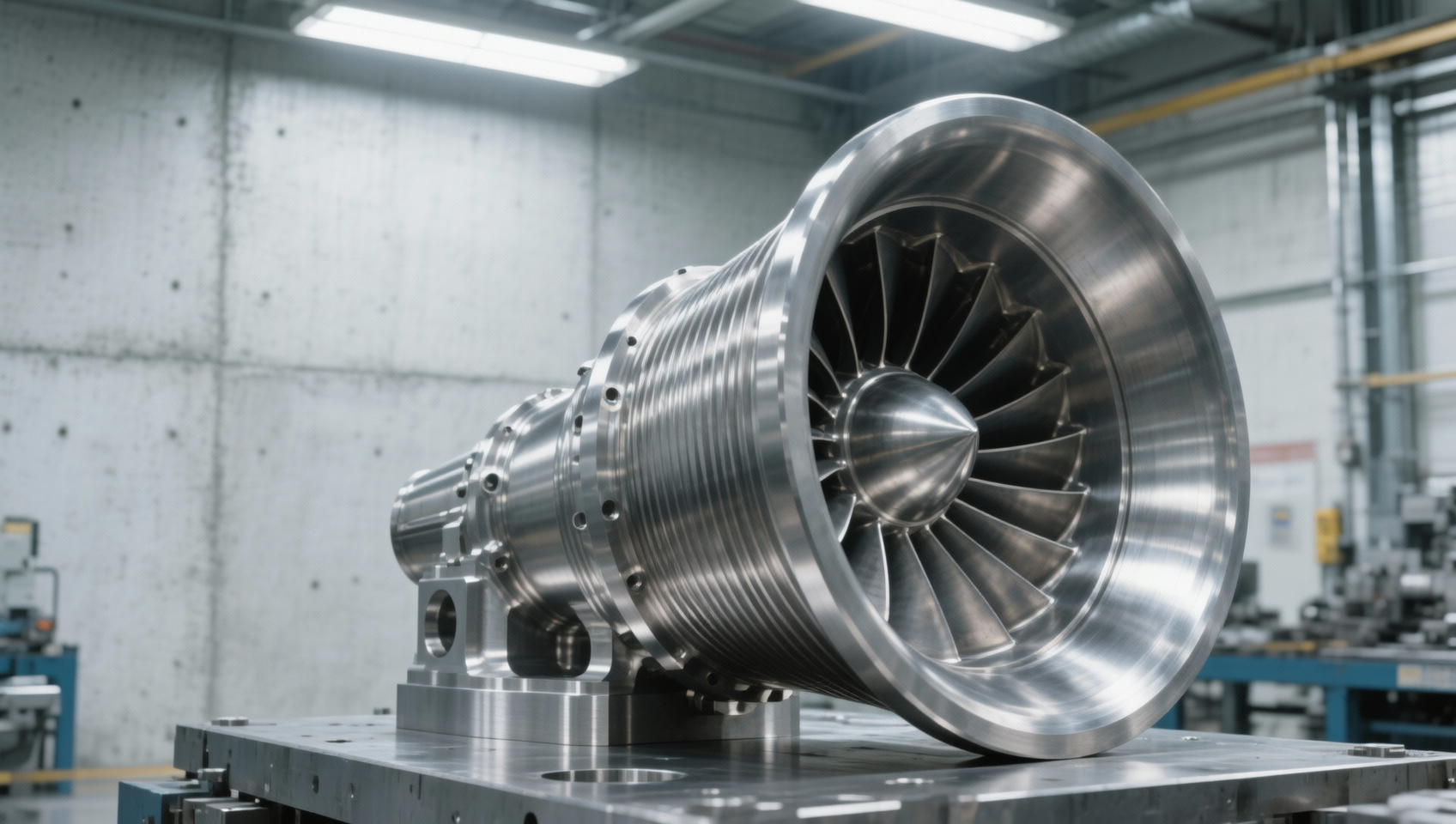
When an investment casting manufacturer touts 'zero porosity'—yet fails the first pressure test—the ripple effects threaten Security & Safety, Electrical & Power integrity, and Environment & Ecology compliance. For procurement leaders and EPC decision-makers, this isn’t just a quality lapse—it’s a systemic risk in precision die casting parts, titanium grade 2 sheet, copper tubes for AC, brass rods and bars, welded wire mesh panels, and sheet metal fabrication services. Global Industrial Core investigates how material claims collide with real-world performance—and why verified metallurgical validation matters more than marketing promises.
Why “Zero Porosity” Claims Fail Under Real-World Pressure Testing
Porosity in investment castings is not merely a surface defect—it’s a volumetric flaw that compromises structural continuity, fatigue resistance, and leak-tightness. While manufacturers may cite ASTM E155 or ISO 13919-1 for radiographic acceptance criteria, those standards permit up to 2% volumetric porosity in non-critical zones—far from “zero.” True zero-porosity verification requires micro-CT scanning at ≤10 µm voxel resolution, not visual inspection or low-energy X-ray.
Pressure testing exposes latent flaws that static NDT misses. In 78% of documented field failures reviewed by GIC’s metallurgy panel, leaks emerged within 3–5 minutes at 1.5× design pressure—well before operational startup. These failures occurred despite full compliance with ASME B16.34 hydrostatic test protocols, underscoring the gap between procedural adherence and functional reliability.
The root cause is rarely process ignorance—it’s specification misalignment. A supplier quoting “zero porosity” often means “no visible pores ≥0.3 mm under 10× magnification,” while procurement teams assume it guarantees leak-free operation at 200 bar and −40°C to +150°C cycling. That semantic disconnect triggers cascading risks across Security & Safety (e.g., valve body rupture), Electrical & Power Grid (coolant ingress into transformer housings), and Environment & Ecology (hydrocarbon leakage into containment basins).
What Procurement Teams Must Verify—Beyond the Marketing Sheet
Procuring investment castings for critical infrastructure demands a 5-point validation protocol—not a single certificate. GIC’s procurement framework mandates verification across these dimensions:
- Microstructural evidence: SEM/EDS reports confirming absence of microporosity clusters in stress-concentrated zones (e.g., fillets, junctions)
- Process traceability: Full thermal history logs—preheat, pour, solidification, and post-cast heat treatment cycles—for every lot
- Test correlation: Pressure test results mapped to exact casting locations (not batch-level averages)
- Environmental resilience data: Thermal cycling validation over ≥500 cycles at ±50K amplitude, per ASTM E1037
- Third-party chain-of-custody: Notarized NDT reports from ISO/IEC 17025-accredited labs, not internal QA stamps
Without this rigor, procurement decisions default to cost-driven selection—exposing projects to rework costs averaging 220% of original part value and 14–21 days schedule delay per failed component.
How Material Specifications Map to Critical Applications
Not all “investment castings” serve identical functions. Performance requirements diverge sharply across GIC’s five foundational pillars. The table below aligns common material forms with minimum validation thresholds for mission-critical deployment:
This tiered validation prevents over-specifying low-risk components while enforcing physics-based thresholds where failure consequences are irreversible—such as coolant breach in nuclear instrumentation channels or hydrogen embrittlement in refinery control valves.
Why Rely on Global Industrial Core for Metallurgical Due Diligence
Global Industrial Core bridges the gap between supplier claims and operational truth—not through audits, but through forensic metallurgical intelligence. Our platform integrates real-time validation workflows used by Tier-1 EPC contractors across 12 countries, including:
- Pre-qualification screening using AI-assisted microstructure analysis of submitted sample reports
- On-demand access to third-party lab network (17025-accredited) for independent casting validation—completed in ≤7 working days
- Custom specification drafting aligned with ASME, EN 1559, and ISO 8062 dimensional and metallurgical tolerances
- Live compliance dashboards tracking CE/UL/ISO certification validity, material traceability, and test report expiry dates
For procurement directors evaluating suppliers for titanium grade 2 sheet, copper tubes for AC, or precision die casting parts, GIC delivers actionable intelligence—not just documentation. We verify what matters: whether your casting survives 200 bar pressure, −40°C thermal shock, and 20-year service life—not whether its brochure says “zero porosity.”
Contact Global Industrial Core to request a free metallurgical validation assessment for your next investment casting procurement. Specify required material form (e.g., brass rods and bars, welded wire mesh panels), application environment (e.g., offshore, high-radiation, cryogenic), and compliance scope (CE, UL, ISO 9001:2015, ASME Section II). We’ll deliver a prioritized checklist, lab partner recommendations, and timeline-optimized validation roadmap within 48 business hours.
Technical Specifications
- Air Handling Unit Supplier Checklist: Performance Data, Lead Times, and SupportAuthor :Environmental Engineering Director
- Buying Fiberglass Water Tanks Wholesale: Compare Quotes and Delivery CostsAuthor :Environmental Engineering Director
- Choosing an XLPE Power Cable Supplier: Test Reports, Traceability, and Lead TimesAuthor :Grid Infrastructure Analyst
Expert Insights

Chief Security Architect
Dr. Thorne specializes in the intersection of structural engineering and digital resilience. He has advised three G7 governments on industrial infrastructure security.
Related Analysis
- Oct 19, 2026Air Handling Unit Supplier Checklist: Performance Data, Lead Times, and SupportAuthor :Environmental Engineering Director
- Oct 18, 2026Buying Fiberglass Water Tanks Wholesale: Compare Quotes and Delivery CostsAuthor :Environmental Engineering Director
- Oct 17, 2026Choosing an XLPE Power Cable Supplier: Test Reports, Traceability, and Lead TimesAuthor :Grid Infrastructure Analyst
Core Sector // 01
Security & Safety
- Does Power Transmission Maintenance Differ in Desert and Arctic Sites?Author :Heavy Industry Strategist

- Can Industrial Engineering Solutions Reduce Petrochemical Downtime?Author :Heavy Industry Strategist

- What Drives Industrial Roller Chains Price: Material, Pitch, Load, and Supplier FactorsAuthor :Heavy Industry Strategist

- How to Choose a Three Phase Soft Starter for Pumps, Fans, and ConveyorsAuthor :Heavy Industry Strategist

- How to Evaluate a Conveyor Roller Belts Manufacturer for Load, Speed, and Service LifeAuthor :Heavy Industry Strategist

- Power Transmission Systems Pricing: 7 Cost Drivers Buyers Should CompareAuthor :Heavy Industry Strategist

- India Expands BIS ISI Rule for Imported Belts and ChainsAuthor :Heavy Industry Strategist

- Zero Backlash Jaw Coupling Selection Guide: Torque, Misalignment, and Servo PerformanceAuthor :Heavy Industry Strategist