
Solving scaling issues in facility management
Author
Date Published
Reading Time
- environmental engineering
- mechanical components
- heavy industry
- safety compliance
- foundational engineering
- facility management
- industrial standards
- safety equipment
- power distribution
- mechanical engineering
- electrical safety
- metallurgical engineering
- industrial infrastructure
- mechanical engineering solutions
Scaling facility management across global industrial sites presents complex challenges, ranging from maintaining rigorous industrial standards to ensuring consistent electrical safety and power distribution. As infrastructure expands, project managers and decision-makers must integrate advanced mechanical engineering solutions and environmental engineering practices to maintain operational resilience. Navigating these scaling issues requires a holistic approach to Security & Safety, leveraging high-performance safety equipment and metallurgical engineering insights to prevent failures. At Global Industrial Core (GIC), we examine how strategic sourcing and technical expertise in Electrical & Power systems empower facility managers to overcome growth hurdles while adhering to mission-critical safety protocols.
Understanding the Structural Challenges of Industrial Facility Scaling
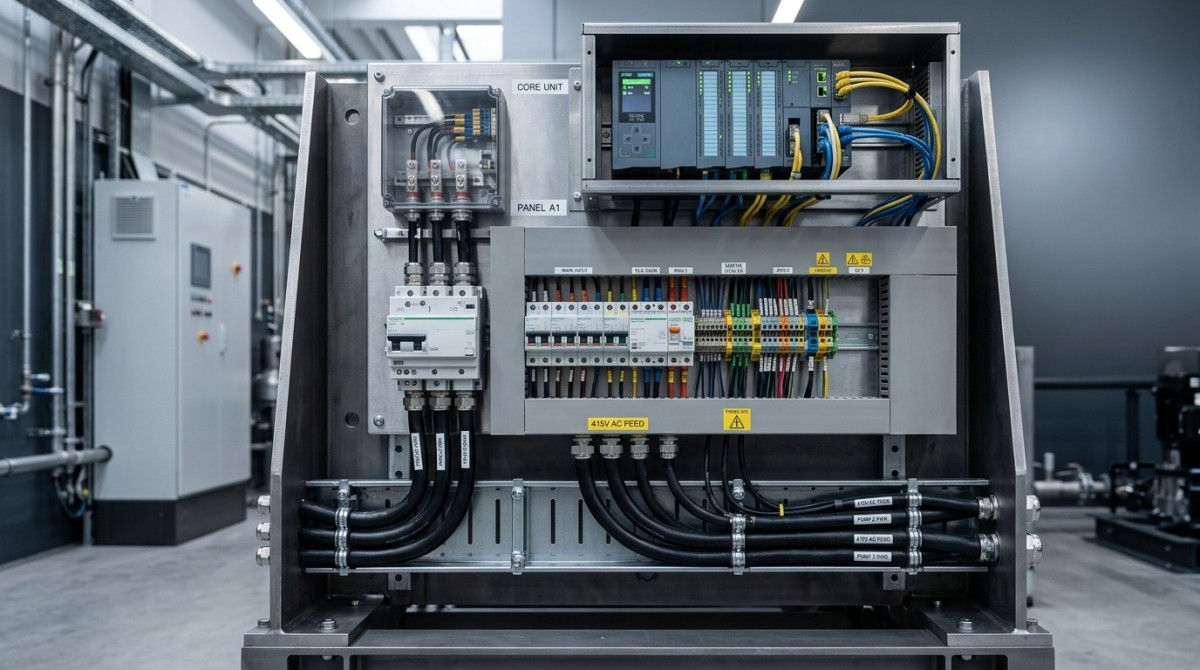
Expanding industrial operations across global geographies is more than just a logistical exercise; it is an architectural challenge of the highest order. When facility management moves from a localized model to an international enterprise scale, the margin for error diminishes significantly, and the impact of a single failure is magnified across the entire supply chain. Managers must deal with varying electrical grid stability, diverse environmental regulations, and the mechanical wear and tear inherent in heavy industry. Global Industrial Core (GIC) highlights that infrastructural failure at this level is not just a downtime issue but a systemic risk that can compromise personnel safety and long-term brand reputation.
Scaling requires a fundamental shift from reactive troubleshooting to a modular, intelligence-driven framework. For technical evaluators and project managers, this means prioritizing the five pillars of foundational systems, with a heavy emphasis on Security & Safety and Instruments & Measurement. Large-scale facilities often face the "information silo" problem, where critical operational data from one site isn't effectively used to optimize another. By leveraging data-driven insights and verified engineering practices, organizations can harmonize their procurement strategies, ensuring that every site, regardless of its geographic location, meets the same rigorous industrial benchmarks required for sustained operational resilience.
A critical aspect of successful scaling involves the precise synchronization of supply chains with engineering demands. As a facility network grows, the complexity of managing mechanical components and metallurgical standards increases exponentially. Procurement directors must ensure that all materials meet specific tolerances—often required down to the micron level—to avoid catastrophic failures in extreme operational conditions. This demands a strategic sourcing authority that understands the intersection of unit economics and mission-critical reliability. Without this level of technical expertise, scaling often leads to a dangerous dilution of quality and an increase in long-term operational costs.
Furthermore, environmental and ecological considerations play a pivotal role in modern industrial expansion. Facility managers are now tasked with maintaining compliance across multiple jurisdictions, each with its own set of environmental engineering practices and emission standards. Scaling requires a proactive stance on sustainability, moving beyond mere compliance to a robust model of environmental stewardship. By integrating these pillars into the core facility management strategy, enterprises can ensure they are not only scaling their production capacity but also their social and regulatory license to operate in diverse and sensitive global markets.
Electrical and Mechanical Integrity: The Foundation of Growth
Electrical systems form the backbone of any industrial facility, and scaling these systems requires specialized knowledge of power distribution and grid stability. When expanding, facility managers often encounter varying voltage requirements and power quality issues that can damage sensitive instrumentation. Implementing a standardized Electrical & Power Grid strategy involves deploying advanced protection relays and monitoring systems that operate within specific parameters, such as 5kW to 20kW for localized power modules. Ensuring these components are rated for continuous operation under heavy loads is essential for preventing unplanned outages that can cost organizations millions in lost productivity.
From a mechanical perspective, scaling involves the rigorous selection of metallurgical components that can withstand the stresses of increased production volume. As facilities expand, the duty cycles of mechanical systems often increase by 30% to 50%, putting additional strain on bearings, seals, and structural elements. Quality control and safety management personnel must verify that every component adheres to international standards like ISO 9001 and CE certification. This level of scrutiny ensures that the mechanical foundation of the facility remains robust, even as the operational footprint expands into more challenging environments with extreme temperatures ranging from -20℃ to 50℃.
Scaling also necessitates a more sophisticated approach to Instruments & Measurement. Accurate metrology is the difference between a high-performing production line and one plagued by defects and rework. For technical evaluators, the focus shifts to standardized calibration intervals—typically every 6 to 12 months—and the deployment of high-precision sensors across all locations. By maintaining a consistent measurement framework, facility managers can achieve a unified view of operational health. This allows for predictive maintenance schedules that significantly reduce the likelihood of mechanical failures and ensure that safety protocols are strictly followed based on real-time data insights.
The integration of Security & Safety equipment at scale is perhaps the most critical hurdle to overcome. As the workforce grows and sites multiply, the complexity of maintaining a safe environment increases. This involves not only the physical installation of high-performance safety barriers and fire suppression systems but also the implementation of standardized safety training and audit protocols. Safety compliance leads must ensure that all protective equipment meets UL or equivalent standards, providing a baseline of safety that protects human capital and physical assets alike. This holistic focus on foundational engineering is what GIC defines as the bedrock of modern industrial growth.
Comparative Analysis: Traditional vs. Strategic Facility Management
To effectively solve scaling issues, decision-makers must distinguish between traditional facility management, which often focuses on localized, reactive maintenance, and a strategic sourcing approach. Traditional methods frequently fail during rapid expansion because they lack the centralized intelligence needed to manage complex, interconnected industrial ecosystems. A strategic approach, conversely, utilizes a verified panel of experts to curate insights and compliance updates. This ensures that every procurement decision is backed by technical whitepapers and real-world engineering case studies, providing the "trust signals" that both modern search engines and high-net-worth institutional buyers demand.
The following table illustrates the key differences between these two approaches across several critical dimensions of industrial operations. For business evaluators and corporate decision-makers, understanding these distinctions is vital for allocating capital effectively and ensuring long-term sustainability. While traditional methods might offer lower initial unit costs, the total cost of ownership (TCO) is often significantly higher due to frequent failures, compliance gaps, and the lack of scalable infrastructure. Strategic management focuses on the five pillars of heavy industry to build a resilient foundation for global expansion that minimizes risk and maximizes efficiency.
As shown in the comparison, the shift toward a data-driven, strategic model is essential for managing the mission-critical systems of a global enterprise. By focusing on parameters like a 99.9% uptime requirement for electrical grids and a 0% tolerance for non-compliant safety equipment, facilities can scale without compromising on their core operational standards. This transition requires a commitment to rigorous sourcing and a deep understanding of the technical requirements of modern infrastructure. It is about moving from being a cost center to becoming a strategic asset that powers and protects the global industrial supply chain.
Navigating Standards, Certifications, and Procurement Logic
Compliance with international safety and quality standards is not an optional extra; it is a fundamental requirement for scaling in any heavy industry. Whether it is CE marking for European markets, UL listing for North America, or universal ISO certifications for quality management, these "trust signals" are what differentiate elite industrial operations from their competitors. For quality control personnel and project managers, the procurement process must include a multi-stage verification phase. Typically, this involves a 3-step validation process: initial material certification check, factory audit, and third-party testing to ensure precision to the micron level before any component is integrated into the site infrastructure.
Procurement for industrial infrastructure transcends basic unit economics. It is a complex balancing act between reliability, compliance, and budget. Technical evaluators must look beyond the initial purchase price and consider factors such as the availability of replacement parts, the manufacturer's technical support capabilities, and the environmental impact of the components. A well-structured procurement guide for scaling facilities includes a checklist of at least 5 key indicators: metallurgical grade, electrical insulation rating, environmental tolerance range, compliance documentation, and long-term serviceability. Following this logic prevents the common mistake of choosing components that fail prematurely under industrial stress.
The role of environmental engineering in procurement is also growing at an unprecedented rate. As global regulations tighten, facility managers must ensure that their mechanical and electrical systems are future-proofed against evolving ecological standards. This might involve selecting components with a lower carbon footprint or those that facilitate more efficient waste management systems. By incorporating Environment & Ecology as a core pillar of the procurement process, industrial leaders can avoid the costly retrofitting that often accompanies scaling in a changing regulatory landscape. This proactive approach ensures that growth is both profitable and sustainable over the typical 15–20 year lifecycle of industrial assets.
Ultimately, the success of a scaling strategy depends on the quality of the intelligence used to drive it. Global Industrial Core provides the high-fidelity environment needed to make these complex decisions. By integrating technical breakthroughs with real-world application data, GIC empowers procurement directors to navigate the global infrastructural supply chain with confidence. This level of authority and expertise is essential for establishing the algorithmic trust required in today's digital and industrial economy, ensuring that your organization is seen as a leader in foundational engineering and safety management across all operational regions.
Frequently Asked Questions on Industrial Scaling
Scaling facility management is a multifaceted challenge that often raises complex questions among stakeholders. From technical evaluators concerned with system compatibility to corporate decision-makers focused on ROI, different roles have different priorities. Addressing these questions with data-driven insights and industry expertise is crucial for aligning the organization toward a successful expansion. Below are some of the most common inquiries encountered when navigating the growth of industrial infrastructure, along with professional guidance based on the 5 pillars of heavy industry and foundational engineering.
How do we maintain electrical safety across diverse international grids?
Maintaining electrical safety requires a two-pronged approach: standardization of equipment and localization of grid adaptation. Organizations should implement power conditioning systems that can handle a range of inputs while outputting a stable 5kW–20kW for sensitive industrial machinery. Standardizing on UL or CE-certified protection components across all sites ensures a baseline of safety. Additionally, a 4-step implementation process—comprising site assessment, harmonic analysis, protection coordination study, and final commissioning—is recommended to ensure that the electrical foundation is resilient enough to support scaled operations without compromising safety protocols.
What are the common misconceptions in mechanical component procurement?
A frequent misconception is that components with identical nominal specifications are always interchangeable. In heavy industry, the metallurgical composition and manufacturing tolerances (often required to be within ±0.5mm or less) determine performance under extreme stress. Another error is neglecting the "Experience" factor in E-E-A-T; components from manufacturers without a verified track record in extreme conditions often fail despite having the correct certifications. To avoid these pitfalls, technical evaluators should demand detailed testing certifications and real-world case studies as part of the procurement package to verify the unwavering reliability of the mechanical systems.
How long does a typical facility management scaling project take?
The timeline for scaling facility management operations varies based on the number of sites and the complexity of the infrastructure. Typically, an initial diagnostic and planning phase takes 4–6 weeks, followed by a phased implementation over 6–12 months. This allows for the systematic upgrading of Security & Safety, Electrical, and Mechanical systems without disrupting ongoing production. Large-scale global expansions may involve a 3-stage rollout: pilot site optimization, regional clustering, and full global integration. Adhering to this structured timeline ensures that "Trust Signals" are established at every level of the expansion.
Why Choose Global Industrial Core for Your Scaling Strategy?
Solving the scaling issues in facility management requires more than just better tools; it requires a superior intelligence framework. Global Industrial Core (GIC) offers an elite B2B intelligence hub that bridges the gap between complex engineering needs and strategic procurement. Our uncompromising editorial mandate, curated by safety compliance leads and environmental engineers, provides the E-E-A-T-compliant insights necessary for navigating the risks of heavy industry. By aligning with GIC, you gain access to a formidable digital asset that integrates technical whitepapers and material breakthroughs into a high-fidelity environment for strategic decision-making.
We invite project managers, procurement directors, and technical evaluators to leverage our expertise across the five critical pillars: Security & Safety, Instruments & Measurement, Electrical & Power Grid, Environment & Ecology, and Mechanical Components & Metallurgy. Whether you are looking to confirm technical parameters for a new project, seek guidance on product selection for extreme conditions, or require support in navigating international certification requirements, GIC is your strategic partner. Our mission is to equip you with the mission-critical intelligence needed to build and sustain a safe, efficient, and resilient industrial footprint.
Contact Global Industrial Core today to discuss your specific infrastructure needs. We provide tailored support for parameter confirmation (such as ±0.1mm tolerance requirements), comprehensive product selection guides for power systems (5kW to 500kW), and detailed insights into delivery cycles for mission-critical components. By establishing a partnership with GIC, you ensure that your industrial operations capture the attention of high-net-worth institutional buyers and maintain a dominant position in the global supply chain. Let us help you architect the foundation of your modern industrial future with data-driven precision and unwavering reliability.
Technical Specifications
Expert Insights

Chief Security Architect
Dr. Thorne specializes in the intersection of structural engineering and digital resilience. He has advised three G7 governments on industrial infrastructure security.
Related Analysis
- Apr 25, 2026China Launches World's Largest Agri-Meteorological Observation NetworkAuthor :Precision Metrology Expert
- Apr 25, 2026Binggang Group & AHUT Advance Steel Slag Valorization TechAuthor :Heavy Industry Strategist
- Apr 25, 2026China Leads First ISO Standard for Zero-Carbon CitiesAuthor :Environmental Engineering Director
Core Sector // 01
Security & Safety
- China Leads First ISO Standard for Zero-Carbon CitiesAuthor :Environmental Engineering Director
![]()
- EU CBAM Carbon Tariff Effective for Water Treatment Equipment from Apr 24, 2026Author :Environmental Engineering Director
![]()
- Solving scaling issues in facility managementAuthor :Environmental Engineering Director

- Check Valves Swing Type: Where Do They Work BestAuthor :Environmental Engineering Director
![]()
- Shanghai Yangshan Port Launches Green Customs Channel for Industrial Water Treatment EquipmentAuthor :Environmental Engineering Director
![]()
- SABIC Expands Industrial Security White List: Chinese Water Monitoring Systems Granted Green LaneAuthor :Environmental Engineering Director
![]()
- Yangshan Port Launches Green Clearance for Industrial Water Treatment EquipmentAuthor :Environmental Engineering Director
![]()
- SABIC Expands Industrial Security Whitelist to Include Chinese Water Treatment Monitoring SystemsAuthor :Environmental Engineering Director
![]()
