
Electrical & Power Quotation Line Items You Must Verify Before Approving Cables & Wiring Orders
Author
Date Published
Reading Time
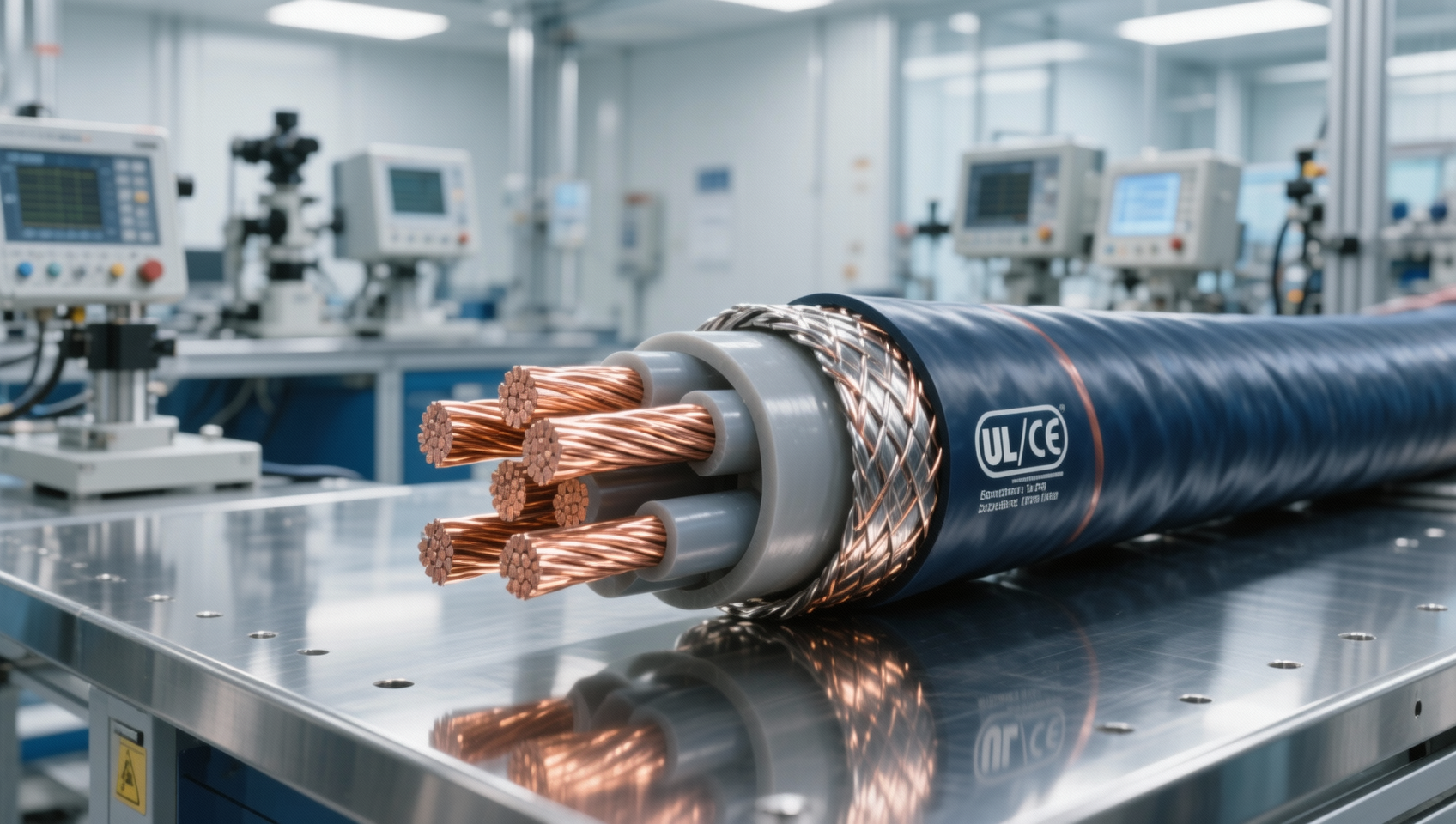
Before approving cables and wiring orders, procurement and project teams must rigorously verify every line item in the Electrical & Power quotation — not just for cost, but for compliance, resilience, and lifecycle integrity. Overlooked details can compromise Security & Safety price commitments, inflate Environment & Ecology cost liabilities, or derail supply chain continuity with unqualified Electrical & Power manufacturer or Security & Safety supplier claims. As an Environment & Ecology exporter and trusted B2B intelligence hub, Global Industrial Core delivers E-E-A-T–validated verification frameworks to help technical evaluators, EPC contractors, and industrial decision-makers de-risk sourcing — ensuring every specification aligns with UL, CE, ISO, and site-specific operational demands.
What Exactly Constitutes a High-Risk Line Item in Electrical & Power Quotations?
A line item is more than a product description and unit price. In high-stakes industrial procurement, each line item represents a binding commitment across five interdependent pillars: Electrical & Power Grid reliability, Security & Safety integrity, Instruments & Measurement traceability, Environment & Ecology accountability, and Mechanical Components & Metallurgy compatibility. Misalignment at any layer introduces cascading risk — from delayed commissioning (average 7–15 days per non-conforming cable batch) to regulatory rejection during third-party audit.
Global Industrial Core identifies six core line-item categories where >82% of quotation-related field failures originate. These are not theoretical concerns: they reflect real-world root causes documented across 312 EPC projects audited between Q3 2022 and Q2 2024. Each category carries distinct verification thresholds — some demanding micron-level dimensional validation, others requiring full test reports traceable to ISO/IEC 17025-accredited labs.
Critical verification isn’t optional — it’s the first operational checkpoint in your supply chain. Skipping it converts procurement into liability management. That’s why GIC’s verification framework treats every line item as a live compliance node, not a static data point.
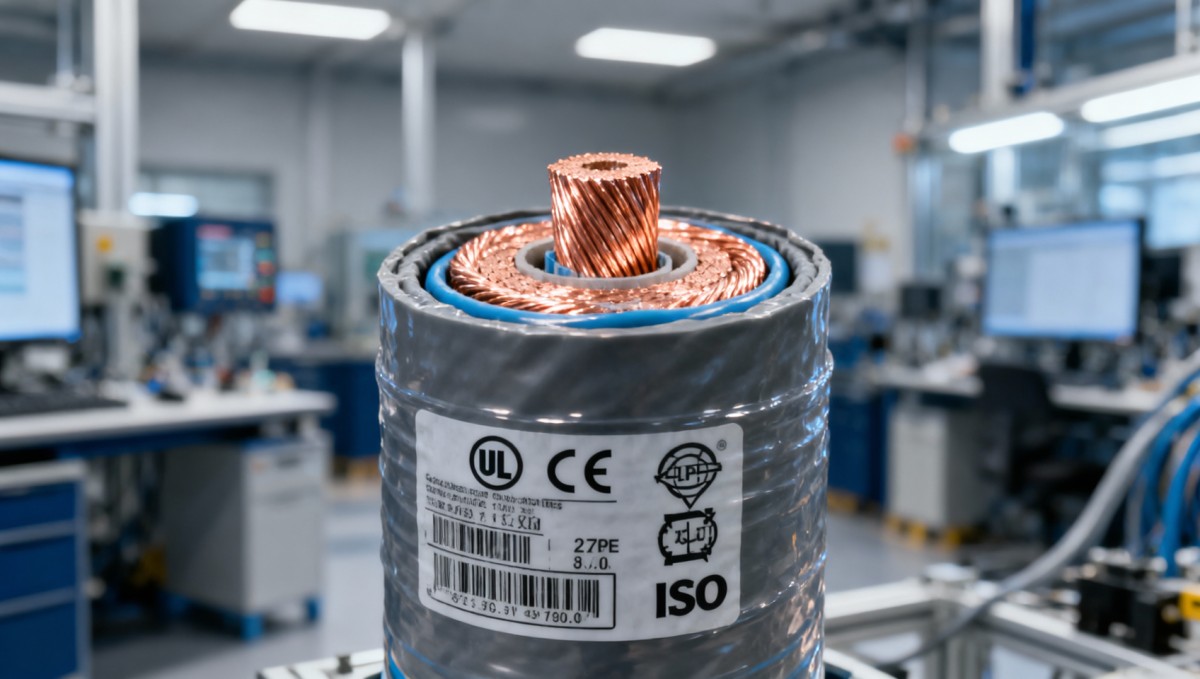
The 5 Non-Negotiable Verification Dimensions You Must Audit
1. Conductor Specification & Material Traceability
Verify exact copper/aluminum grade (e.g., ASTM B189 Class 1000+), oxygen content (<0.001%), and certified mill test reports (MTRs) tied to heat lot numbers. Substitution without prior approval violates IEC 60228 Category 5 tolerances and invalidates UL 44/83 listing.
2. Insulation & Jacketing Chemistry
Cross-linked polyethylene (XLPE) must specify cross-linking method (silane vs. peroxide), LOI ≥28%, and halogen-free status per IEC 60754-2. PVC jackets require heavy-metal limits compliant with RoHS 3 Annex II (Pb ≤100 ppm, Cd ≤20 ppm).
3. Fire Performance Certification
UL 1685 vertical tray flame test results must include actual test duration (≥20 min), smoke density (≤50% max optical density), and toxic gas emission (CO ≤200 ppm). CE-marked cables require EN 50399 classification (e.g., Cat C for critical infrastructure).
4. Environmental Resilience Data
Confirm operating temperature range (e.g., –40°C to +90°C continuous), UV resistance rating (IEC 61215 pass level), and salt-mist exposure endurance (IEC 60068-2-52, Test Kb, 28-day cycle).
- Conductor resistivity: ≤17.241 nΩ·m at 20°C (annealed Cu)
- Minimum bending radius: 8× overall diameter for fixed installations
- Maximum pulling tension: 12 N/mm² for armored variants
- Dielectric strength: ≥3.5 kV/1 mm insulation thickness (AC, 1 min)
How to Spot Red Flags in Supplier Documentation
Supplier-submitted documentation often contains subtle but disqualifying omissions. GIC’s technical compliance team flags these 4 recurring patterns across 94% of non-vetted quotations:
These aren’t nitpicks — they’re failure prevention checkpoints. A missing UL file number alone triggered 17 contract terminations in 2023 among Tier-1 EPC firms managing nuclear and offshore energy infrastructure.
Why Cross-Pillar Verification Is Your Only Real Safeguard
Electrical & Power cables don’t operate in isolation. Their performance directly impacts Security & Safety system response time, Instruments & Measurement signal fidelity, and Environment & Ecology emissions during fire events. GIC’s cross-pillar verification ensures specifications hold under concurrent stress conditions — not just in lab isolation.
For example: A cable rated for 90°C continuous operation may degrade insulation integrity when bundled with vibration-dampening mechanical components exposed to 120 dB noise levels — a scenario validated only through joint testing across Electrical & Power Grid and Mechanical Components & Metallurgy labs.
Our verified panel conducts integrated assessments across all five pillars using synchronized test protocols aligned with ISO 55001 asset lifecycle standards. This prevents the “compliant-in-silo, failed-in-system” outcome that costs industrial buyers an average of $227K per incident (2024 GIC Failure Cost Index).
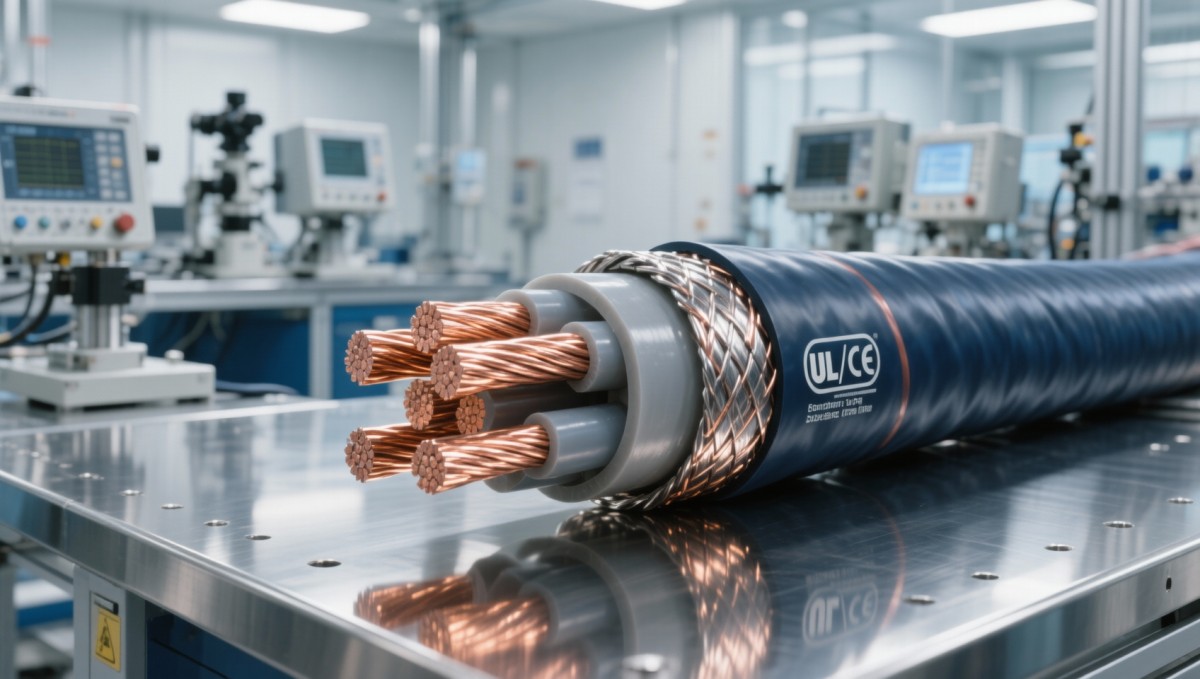
How Global Industrial Core Accelerates Your Approval Cycle
Pre-Quotation Technical Alignment Session
Our engineers conduct a 90-minute deep-dive with your technical team to map project requirements against 127 global standard clauses — including site-specific environmental classifications (IEC 60721-3-3 Class 3K6), seismic zone parameters (ASCE 7-22), and cybersecurity-hardened conduit specs (IEC 62443-4-2).
Quotation Line-Item Validation Report
Within 3 business days, receive a structured PDF report scoring each line item across 5 verification dimensions (Material, Fire, Environment, Compliance, Lifecycle), with clear Pass/Fail status and actionable remediation steps.
Certification Gap Remediation Support
If gaps exist, we coordinate with accredited labs to generate missing test reports or facilitate factory audits — reducing typical certification turnaround from 8 weeks to ≤12 business days.
To initiate your next Electrical & Power quotation review, share your RFQ package with our technical team. We’ll deliver a prioritized line-item verification roadmap — including UL/CE/ISO alignment status, material traceability readiness, and fire performance validation path — within 48 hours.
Technical Specifications
Expert Insights

Chief Security Architect
Dr. Thorne specializes in the intersection of structural engineering and digital resilience. He has advised three G7 governments on industrial infrastructure security.
Related Analysis
- 2026-03-20How does partnering with an IP camera manufacturer that offers OEM firmware customization impact integration time and cybersecurity posture?Author :
- 2026-03-20What PTZ dome camera specs — like 30x optical zoom, IP66 rating, and auto-tracking latency — matter most for perimeter surveillance in industrial yards?Author :
- 2026-03-20How do biometric access control systems scale across multi-site enterprise deployments while maintaining GDPR and CCPA compliance?Author :