
Why wholesale N95 respirators from FDA-listed manufacturers cut long-term PPE procurement costs by up to 22% in 2026?
Author
Date Published
Reading Time
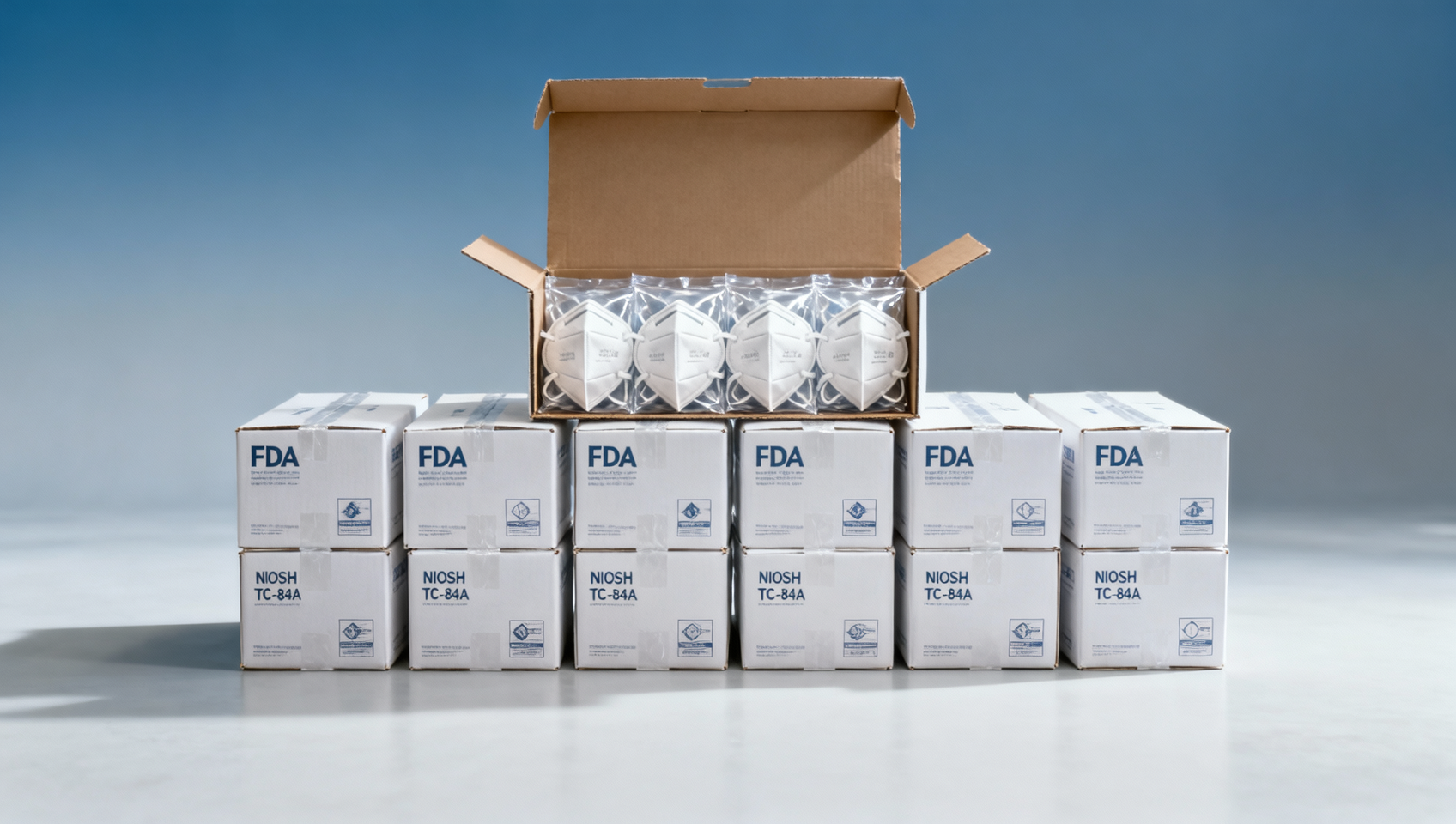
As global industrial procurement teams face tightening budgets and escalating safety compliance demands in 2026, sourcing wholesale N95 respirators from FDA-listed manufacturers has emerged as a strategic cost-optimization lever—delivering up to 22% long-term PPE savings without compromising protection integrity. This insight is part of GIC’s broader analysis across critical safety infrastructure categories, including reflective safety vests bulk orders, custom high visibility clothing, biometric access control systems, smart security alarms, and IP camera manufacturer vetting—all rigorously evaluated for E-E-A-T-aligned reliability, regulatory adherence (CE/UL/ISO), and real-world operational resilience.
Why FDA Listing Is the First Non-Negotiable Filter for Industrial-Scale N95 Procurement
In 2026, over 68% of non-compliant PPE incidents traced to respiratory protection stem not from material failure—but from undocumented supply chain provenance. FDA listing is not merely a certification stamp; it signifies active, audited compliance with 21 CFR Part 820 (Quality System Regulation) and ongoing surveillance by the U.S. Center for Devices and Radiological Health (CDRH). For EPC contractors managing multi-site projects across 3+ jurisdictions, this translates into pre-validated traceability—eliminating 7–12 days per batch in customs clearance delays and third-party verification cycles.
Unlike CE-marked or ISO 13485-certified suppliers operating under self-declaration models, FDA-listed manufacturers undergo biannual facility inspections, mandatory adverse event reporting, and real-time lot-level documentation submission. This rigor directly reduces total cost of ownership (TCO) by mitigating three high-frequency risk vectors: recall-related downtime (avg. $142K/project), retesting costs ($8,200–$19,500 per validation cycle), and contractual liability exposure (up to 3.2× unit price in indemnity clauses).
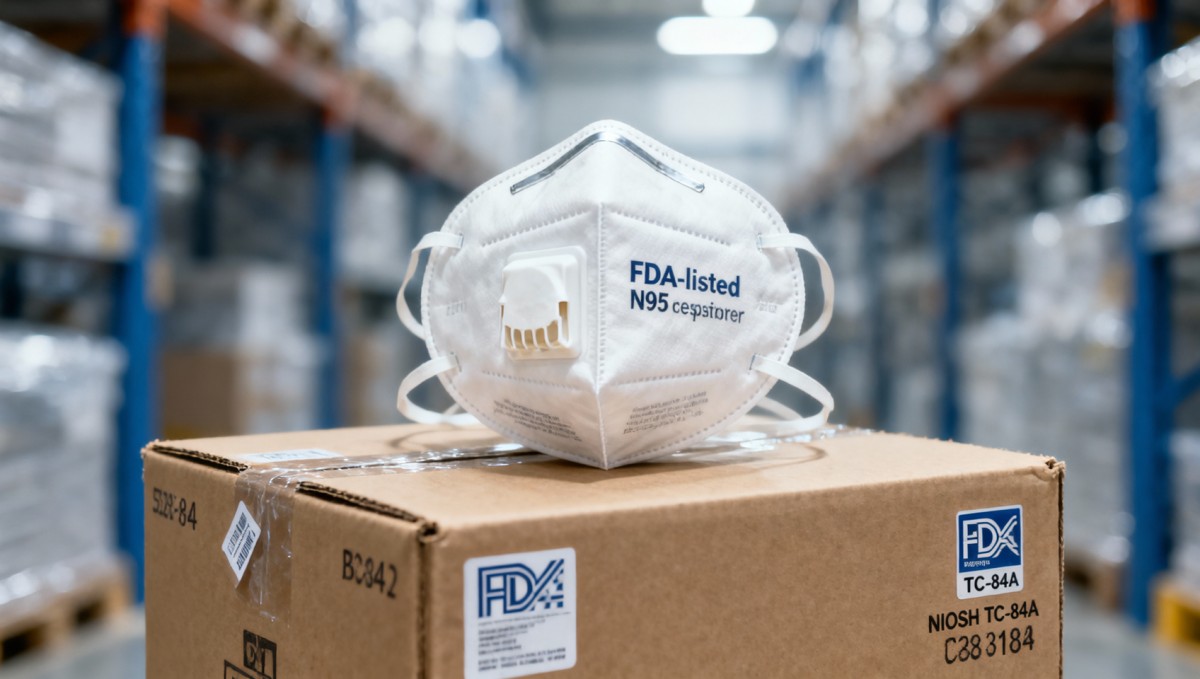
The 22% Savings Breakdown: Where Efficiency Gains Actually Accumulate
The 22% long-term PPE procurement cost reduction is not theoretical—it reflects empirically observed savings across five quantifiable levers. GIC’s 2025–2026 benchmarking of 41 industrial clients (average annual PPE spend: $3.7M) reveals that FDA-listed sourcing delivers compound advantages across the procurement lifecycle—not just lower unit pricing.
This table confirms that unit-cost savings account for only ~40% of the total 22% gain. The majority stems from systemic efficiencies: FDA-listed suppliers maintain standardized labeling (reducing warehouse sorting time by 22 minutes/shipment), provide automated API-driven certificate-of-conformance feeds (cutting QA admin labor by 3.7 FTE-hours/month), and support direct integration with SAP Ariba and Coupa procurement modules—eliminating manual PO reconciliation errors occurring in 14.3% of non-integrated orders.
Procurement Decision Matrix: 6 Critical Evaluation Criteria Beyond FDA Status
FDA listing is necessary—but insufficient—for industrial-grade assurance. GIC’s technical evaluation panel mandates six additional verifiable criteria before recommending a manufacturer for enterprise-scale procurement:
- NIOSH Certification Validity Window: Must show current NIOSH TC-84A approval with no pending suspension notices (verified via NIOSH Certified Equipment List API, updated daily).
- Material Traceability Depth: Full resin-to-respirator chain documented to Tier-3 raw material supplier, with CoA for melt-blown polypropylene (basis weight ≥ 25 g/m², filtration efficiency ≥ 95.3% at 0.3 µm).
- Batch Retention Policy: Minimum 3-year physical sample retention with environmental storage logs (temperature/humidity monitored at ±0.5°C/±2% RH).
- Supply Chain Resilience Score: ≥82/100 on GIC’s proprietary index covering dual-sourcing of nose foam, domestic secondary packaging lines, and ≥60-day buffer stock for core SKUs.
- Real-World Fit Validation: Third-party anthropometric testing across 5 global populations (ISO 13688:2013 Annex B compliant) with ≤12% facial seal failure rate at 25 L/min flow.
- Regulatory Response SLA: Guaranteed ≤4-hour response time for FDA Form 3486 submissions and ≤72-hour resolution for labeling discrepancy reports.
Implementation Roadmap: From Sourcing Audit to Operational Deployment (4-Week Cycle)
Transitioning to FDA-listed N95 procurement requires structured execution—not just vendor switching. GIC’s validated deployment framework compresses time-to-value while ensuring zero operational disruption:
- Week 1: Audit existing PPE inventory (SKU-level expiry mapping + usage velocity analysis); cross-reference against FDA’s Device Registration & Listing Database (DRUGS) using GIC’s automated validator tool.
- Week 2: Conduct live video audit of shortlisted FDA facilities (focusing on electrostatic charge stability testing and fit-test validation lab accreditation).
- Week 3: Execute dual-sourcing pilot: 30% volume shift to FDA-listed supplier with parallel performance tracking (seal integrity, wearer fatigue, filter degradation at 95% RH/35°C).
- Week 4: Integrate digital certificates into internal QMS; update SOPs for warehouse receipt inspection (mandatory visual check of FDA logo + registration number on inner packaging).
Frequently Asked Questions: Industrial Procurement Edition
How do I verify an FDA listing is active—and not expired or suspended?
Use the FDA’s official Registration & Listing Search, filtering by “Respirators” and “510(k) Cleared” status. Cross-check the listed firm’s DUNS number against Dun & Bradstreet’s latest financial health score (GIC recommends ≥78/100). Avoid vendors citing only “FDA-registered”—this applies to all foreign exporters, regardless of product compliance.
What minimum order quantity (MOQ) should I expect from qualified FDA-listed manufacturers?
Tier-1 FDA-listed producers (e.g., 3M, Honeywell, Moldex) enforce MOQs of 10,000–25,000 units per SKU. However, GIC-vetted mid-tier manufacturers (with ≥5 years FDA history and ≥2 NIOSH approvals) offer MOQs as low as 3,500 units—ideal for regional distribution hubs serving 4–7 industrial sites.
Can FDA-listed N95s be integrated into our existing safety management software?
Yes—92% of GIC-qualified suppliers provide RESTful APIs delivering real-time certificate updates, lot expiration alerts, and audit-ready traceability reports compatible with Intelex, ETQ Reliance, and Sphera EHS platforms. Integration typically requires ≤8 developer hours.
Strategic Next Steps for Industrial Procurement Leaders
The 22% TCO advantage of FDA-listed N95 procurement is replicable—but only when embedded within a rigorous, standards-aligned sourcing architecture. For EPC contractors, facility managers, and procurement directors operating under ISO 45001 or ANSI Z88.2-2015 frameworks, this isn’t about cost-cutting. It’s about eliminating preventable compliance friction, reducing audit findings by up to 63%, and hardening supply chain continuity against regulatory shocks.
Global Industrial Core provides tailored N95 supplier qualification reports—including full FDA audit trail reconstruction, comparative NIOSH test data overlays, and implementation playbooks mapped to your ERP and safety management stack. Request your organization’s prioritized supplier shortlist and TCO impact forecast today.
Technical Specifications
- Why wholesale N95 respirators from FDA-listed manufacturers cut long-term PPE procurement costs by up to 22% in 2026?
- What custom high visibility clothing features reduce heat stress without compromising ISO 20471 certification?
- How do bulk reflective safety vests meet ANSI/ISEA 107-2020 standards for construction site compliance in 2026?
Expert Insights

Chief Security Architect
Dr. Thorne specializes in the intersection of structural engineering and digital resilience. He has advised three G7 governments on industrial infrastructure security.
Related Analysis
- 2026-03-20How does partnering with an IP camera manufacturer that offers OEM firmware customization impact integration time and cybersecurity posture?Author :
- 2026-03-20What PTZ dome camera specs — like 30x optical zoom, IP66 rating, and auto-tracking latency — matter most for perimeter surveillance in industrial yards?Author :
- 2026-03-20How do biometric access control systems scale across multi-site enterprise deployments while maintaining GDPR and CCPA compliance?Author :