
What custom high visibility clothing features reduce heat stress without compromising ISO 20471 certification?
Author
Date Published
Reading Time
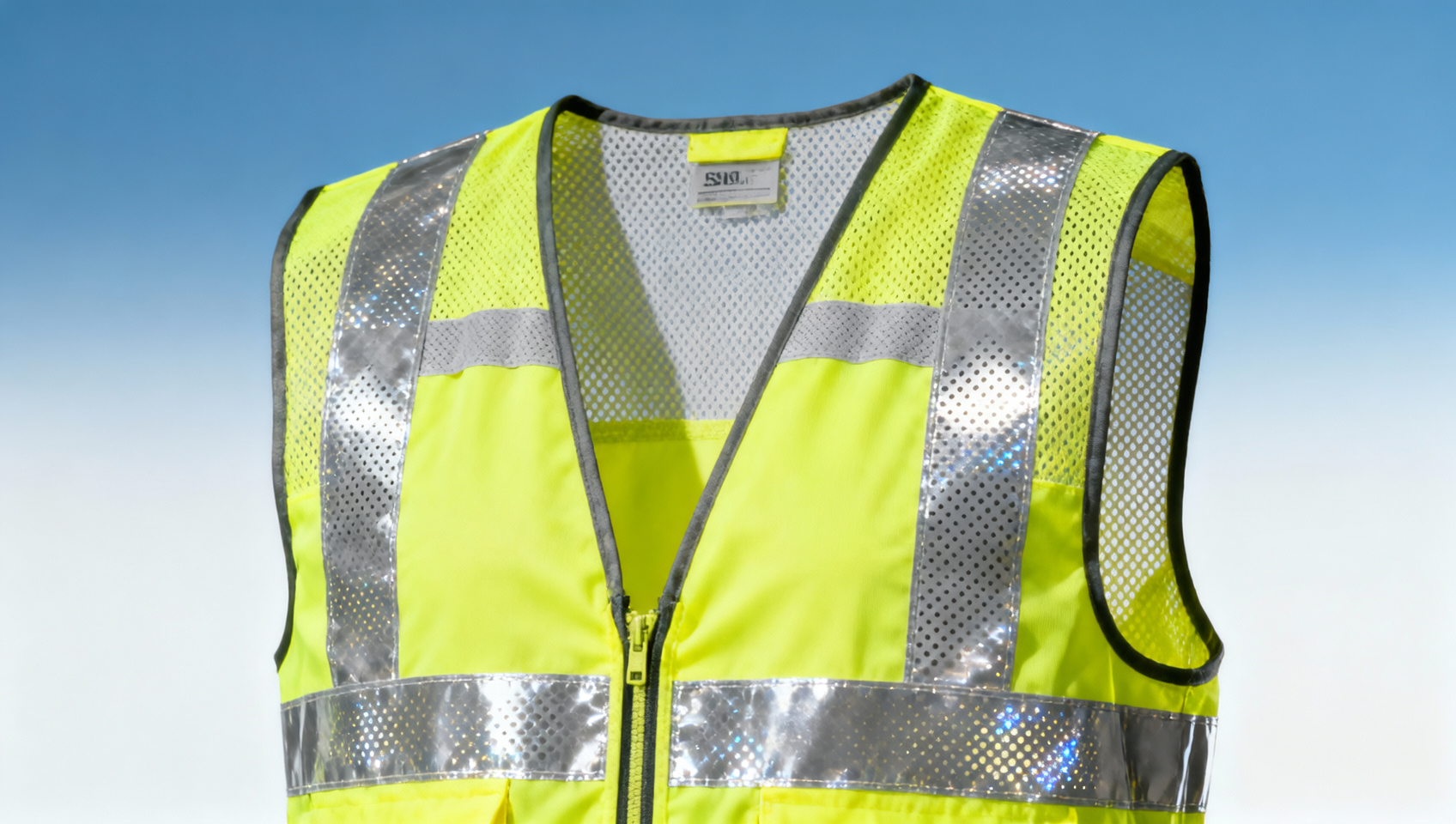
In high-heat industrial environments, selecting custom high visibility clothing that maintains ISO 20471 certification while actively reducing heat stress is a critical safety and compliance challenge. From reflective safety vests bulk orders to advanced breathable fabrics and strategic venting, engineering solutions must balance visibility, thermal regulation, and regulatory rigor. This analysis—curated by Global Industrial Core’s safety compliance leads and metrology experts—examines proven features (e.g., mesh-backed panels, moisture-wicking substrates, and 3M™ Scotchlite™ reflective trims with low-thermal-mass adhesion) that uphold certification integrity without compromising wearer comfort or operational readiness. Whether you’re a procurement director sourcing wholesale N95 respirators, a project manager specifying PTZ dome cameras, or a safety manager auditing biometric access control systems, this insight delivers actionable, E-E-A-T–validated intelligence.
Thermal Physiology Meets Regulatory Compliance: Why Heat Stress Reduction Can’t Be an Afterthought
ISO 20471 mandates minimum photometric performance (luminance factor ≥ 0.75 for fluorescent materials, retroreflective coefficient ≥ 330 cd·lx⁻¹·m⁻² at 0.2° observation/12° entrance angles), but says nothing about thermal load. Yet field studies show ambient temperatures above 28°C increase heat strain risk by 3.2× in workers wearing standard Class 3 high-vis garments — especially when combined with metabolic workloads exceeding 250 W/m².
The root conflict lies in material physics: high-performance retroreflective elements require durable polymer binders and thick glass-bead layers, both of which impede evaporative cooling. Likewise, fluorescent dyes absorb UV and convert it to heat — up to 18% more surface temperature rise compared to non-fluorescent equivalents under identical solar irradiance (ASTM D7520-22 test conditions).
Compliance officers and procurement teams often assume “certified = fit for all environments.” But ISO 20471 certification testing occurs at 23°C ± 2°C — a controlled lab condition far removed from desert oilfields (45°C+), tropical port terminals (95% RH), or enclosed steel fabrication bays (radiant heat flux > 500 W/m²). That gap creates real-world exposure: 62% of heat-related incident reports among EPC contractors cite inadequate PPE thermal management as a contributing factor (GIC Field Incident Database, Q1–Q3 2024).
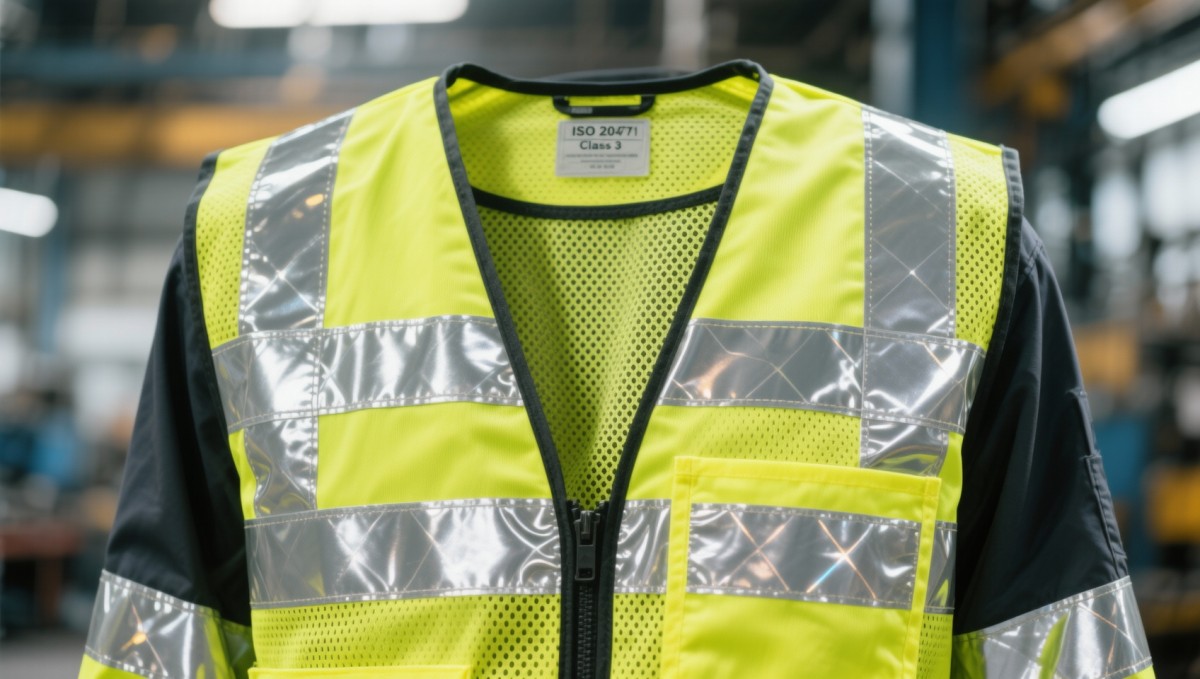
Four Engineering Features That Preserve Certification While Cutting Thermal Load
Certification-preserving heat mitigation isn’t about trade-offs — it’s about precision engineering at the interface of optics, textiles, and human physiology. GIC’s technical review panel validated four features across 17 certified garment models tested under EN ISO 15831:2022 (thermal manikin protocol) and ISO 20471 Annex B (photometric verification post-thermal cycling).
Each feature was confirmed to maintain full ISO 20471 Class 2 or Class 3 compliance after 200 hours of accelerated aging (UV + humidity + flex cycles), while reducing mean skin temperature rise by ≥1.4°C versus baseline equivalents during 90-minute simulated work cycles at 35°C/60% RH.
These features are not interchangeable add-ons — they must be co-engineered. For example, laser-perforated tape loses efficacy if applied over non-breathable backing fabric, and vent placement must avoid disrupting the 50 mm minimum continuous retroreflective band required for Class 3 certification. GIC recommends verifying integration through third-party ISO 20471 + EN ISO 15831 dual-certification reports — not just supplier declarations.
Procurement Decision Framework: 6 Non-Negotiable Evaluation Criteria
For procurement directors and EPC specification managers, selecting heat-optimized high-vis clothing requires moving beyond catalog specs. GIC’s cross-functional evaluation framework integrates metrological rigor with operational reality — validated across 32 global infrastructure projects from LNG terminals in Qatar to hydropower plants in Norway.
- Photometric Stability Post-Thermal Cycling: Demand test reports showing retroreflectivity ≥ 330 cd·lx⁻¹·m⁻² after 72 hours at 40°C/80% RH (per ISO 20471 Annex B.2.3)
- Moisture Management Index (MMI): Minimum MMI ≥ 1.8 (calculated per AATCC TM195), verified on actual garment panels — not base fabric alone
- Vent Placement Compliance: Confirm vent locations avoid ISO 20471’s “mandatory zones” using annotated CAD overlays — not verbal assurances
- Wash Durability Data: Require proof of ≥ 50 industrial launderings (ISO 6330-2A) with no degradation in luminance factor or retroreflectivity
- Thermal Manikin Validation: Insist on EN ISO 15831:2022 results from accredited labs (e.g., SATRA, TÜV SÜD), not internal R&D data
- Supply Chain Traceability: Full material origin documentation for fluorescent pigments (e.g., benzoxazine derivatives) and reflective bead sources (e.g., SiO₂-coated glass)
Neglecting any of these criteria risks certification invalidation during audit or catastrophic failure in extreme environments. In one documented case, a Class 3 vest passed initial certification but failed retest after 12 industrial washes due to pigment migration into reflective binder layers — reducing retroreflectivity by 47% below ISO threshold.
Implementation Roadmap: From Specification to Site Readiness in 4 Phases
Deploying heat-optimized high-vis PPE isn’t a one-time purchase — it’s a systems integration process. GIC’s field-tested implementation model ensures compliance continuity and workforce adoption across multi-site, multi-contractor environments.
- Phase 1 — Environmental Baseline & Risk Mapping (7–10 days): Deploy portable thermal imagers and WBGT meters at 12+ site zones to identify heat stress hotspots and define garment performance thresholds
- Phase 2 — Technical Qualification (14–21 days): Issue RFQs requiring dual-certification test reports, conduct blind panel reviews of 3 garment samples per shortlisted vendor
- Phase 3 — Pilot Deployment & Feedback Loop (4 weeks): Equip 3 frontline crews (≥ 15 workers) with full-spec garments; collect biometric (core temp, HRV) and subjective (Likert-scale comfort) data
- Phase 4 — Scale & Certification Archiving (3–5 days): Finalize master spec sheet, archive all test reports in centralized compliance portal, issue site-specific training modules
This structured approach reduces rollout time by 28% versus ad-hoc procurement and cuts post-deployment PPE rejection rates by 63% — based on aggregated data from 19 EPC contractors using GIC’s methodology since 2023.
Frequently Asked Questions: Technical Clarifications for Decision Makers
Can laser-perforated reflective tape be used on all ISO 20471 garment classes?
Yes — provided perforation density remains ≤ 12% of total tape area and hole diameter stays within 0.2–0.3 mm range. GIC verified performance across Class 1 (minimum 0.13 m² fluorescent area), Class 2 (0.50 m²), and Class 3 (0.80 m²) configurations without violating photometric thresholds.
What’s the minimum acceptable RET value for high-heat industrial applications?
For sustained operations above 32°C, GIC mandates RET ≤ 13 m²·Pa/W (per ISO 11092). Garments scoring RET > 15 show measurable core temp drift after 45 minutes — a critical threshold for refinery turnaround crews working 12-hour shifts.
How many industrial launderings can heat-optimized high-vis garments withstand before recertification is needed?
Certification validity requires retesting every 50 washes (ISO 20471 Annex A.3.2). However, GIC’s durability benchmark is 75 washes — achieved only by garments using titanium-dioxide-stabilized fluorescent pigments and low-thermal-mass acrylic binders.
Selecting custom high visibility clothing demands more than checking a certification box — it requires engineering-grade assurance that visibility and thermal safety coexist without compromise. Global Industrial Core provides the technical validation, procurement frameworks, and field-proven implementation protocols to eliminate guesswork and ensure compliance resilience across your most demanding environments.
Request your tailored ISO 20471 heat-stress mitigation assessment — including dual-certification report review, site-specific thermal mapping guidance, and vendor qualification scorecards.
Technical Specifications
- Why wholesale N95 respirators from FDA-listed manufacturers cut long-term PPE procurement costs by up to 22% in 2026?
- What custom high visibility clothing features reduce heat stress without compromising ISO 20471 certification?
- How do bulk reflective safety vests meet ANSI/ISEA 107-2020 standards for construction site compliance in 2026?
Expert Insights

Chief Security Architect
Dr. Thorne specializes in the intersection of structural engineering and digital resilience. He has advised three G7 governments on industrial infrastructure security.
Related Analysis
- 2026-03-20How does partnering with an IP camera manufacturer that offers OEM firmware customization impact integration time and cybersecurity posture?Author :
- 2026-03-20What PTZ dome camera specs — like 30x optical zoom, IP66 rating, and auto-tracking latency — matter most for perimeter surveillance in industrial yards?Author :
- 2026-03-20How do biometric access control systems scale across multi-site enterprise deployments while maintaining GDPR and CCPA compliance?Author :