
Security & Safety Supplier Due Diligence Checklist for Fire & Rescue Equip Procurement
Author
Date Published
Reading Time
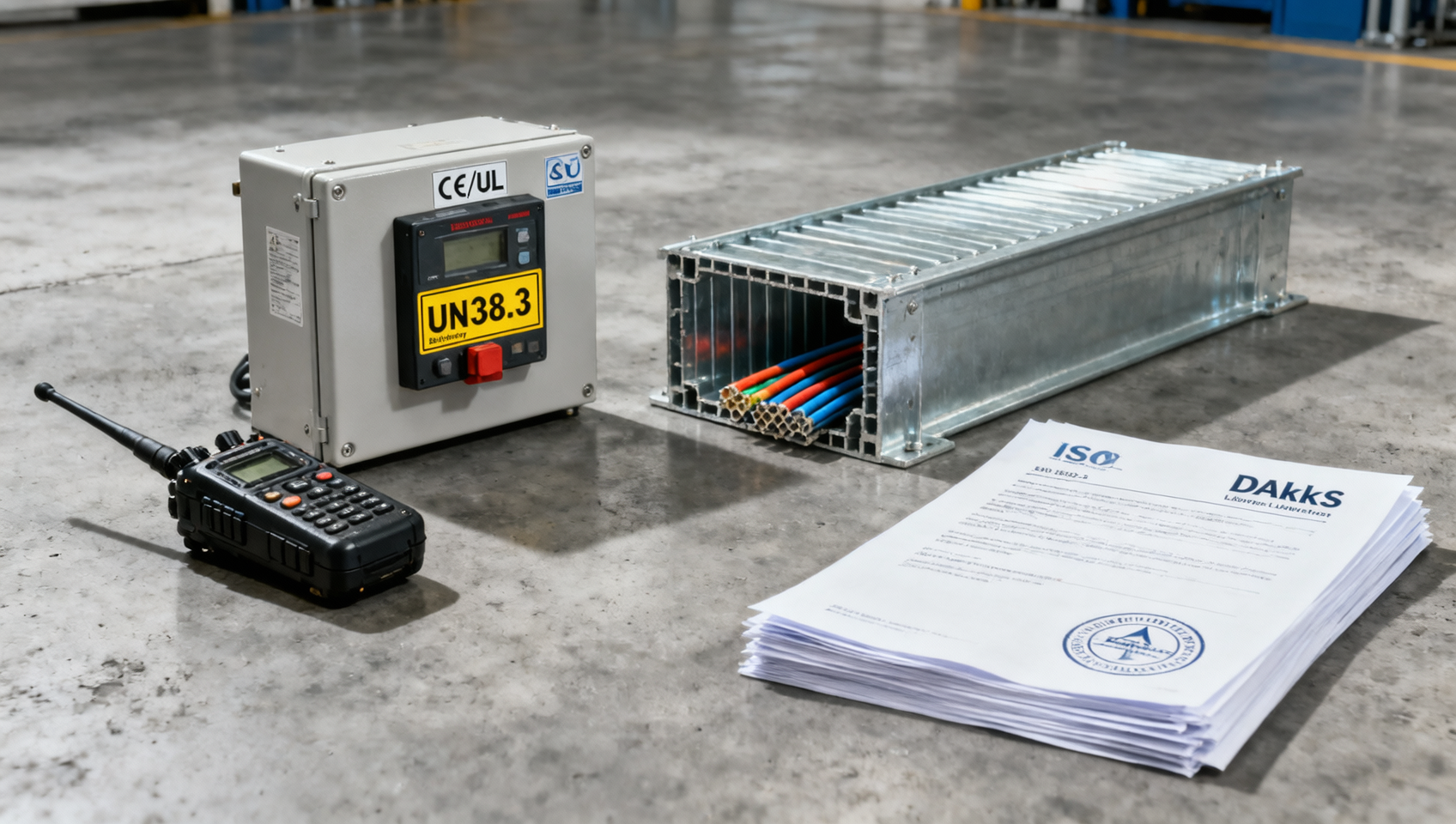
Procuring fire & rescue equipment demands more than competitive pricing—it requires rigorous Security & Safety supplier due diligence to ensure compliance, reliability, and life-critical performance. As global EPC contractors and procurement directors navigate complex supply chains, they must evaluate vendors across five foundational pillars—including Security & Safety supplier credibility, Electrical & Power manufacturer certifications, Environment & Ecology exporter accountability, and true total cost of ownership (not just Environment & Ecology cost or Security & Safety price). This checklist empowers technical evaluators, project managers, and decision-makers with a structured, E-E-A-T-aligned framework—grounded in real-world compliance, UL/CE/ISO validation, and operational resilience.
What Does Security & Safety Supplier Due Diligence Really Cover?
Security & Safety supplier due diligence for fire & rescue equipment procurement is not a one-time vendor questionnaire. It’s a dynamic, multi-layered verification process spanning 3–5 business days per tier-1 supplier—and extending up to 12 weeks when traceability to raw material suppliers is required. At Global Industrial Core (GIC), we define it as the systematic validation of four interdependent dimensions: regulatory legitimacy, technical capability, operational continuity, and ethical accountability.
Unlike general industrial sourcing, Security & Safety due diligence mandates documented proof—not just declarations—for every claim related to flame resistance, structural integrity under thermal stress (e.g., ≥900°C for 30 min), and electromagnetic compatibility in emergency radio bands (400–470 MHz). A single gap in documentation can delay project commissioning by 4–6 weeks, especially in EU or North American infrastructure tenders where Notified Body audits are triggered post-award.
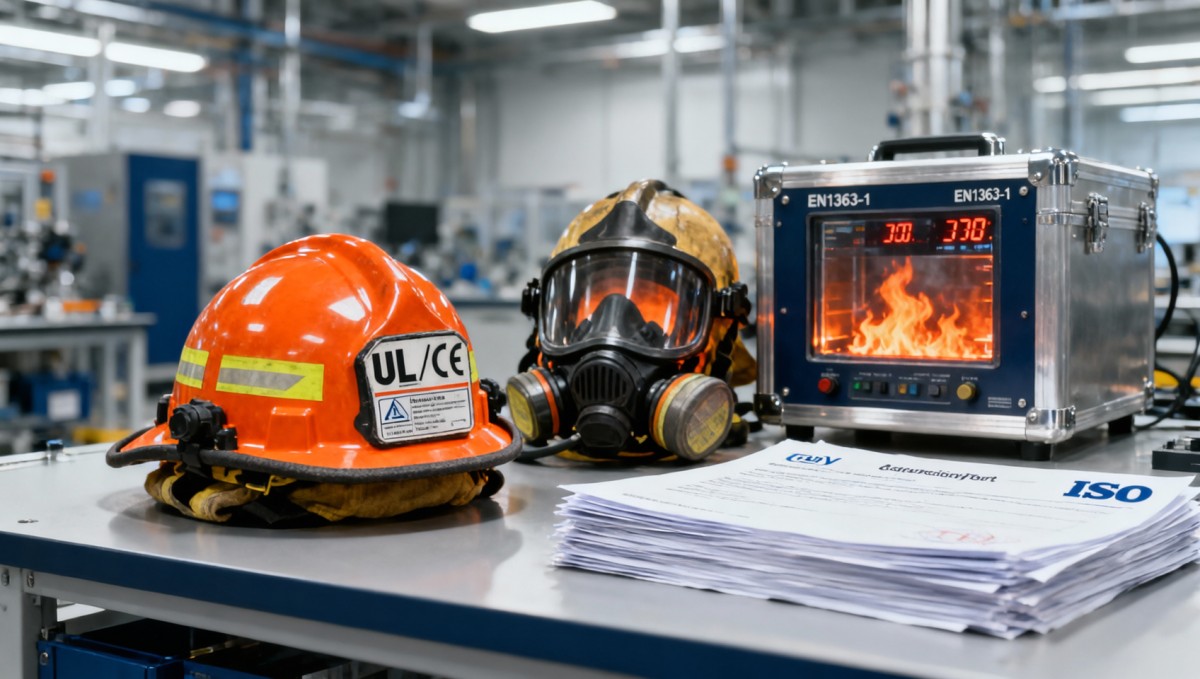
This process also includes forensic review of test reports: Are UL 181B, EN 1363-1, and ISO 8502-3 certifications issued by accredited labs? Is the report timestamp within the last 24 months? Does the serial-numbered sample match current production batches? These are non-negotiable checkpoints—not optional enhancements.
Five Critical Evaluation Dimensions for Fire & Rescue Suppliers
Based on 2023–2024 audit data from 142 EPC projects across oil & gas, transit infrastructure, and healthcare facilities, GIC identifies five evaluation dimensions that collectively determine supplier fitness. Each dimension carries weighted scoring—ranging from 10% (financial transparency) to 25% (certification validity)—and requires third-party corroboration.
- Regulatory Compliance Traceability: Full chain-of-custody documentation for CE marking (EU Declaration of Conformity + Technical File index), UL Component Recognition (E-number verification), and country-specific approvals (e.g., China CCC, Saudi SASO).
- Production Resilience: Minimum 6-month on-site inventory buffer for critical subassemblies; verified via factory visit logs or ERP snapshot reports dated ≤7 days prior to evaluation.
- Test Report Authenticity: Cross-referenced against lab accreditation databases (e.g., UKAS, DAkkS, ANAB); rejection if report lacks digital signature, unique ID, or scope alignment with product SKU.
- Supply Chain Transparency: Tier-2 supplier list with material origin statements (e.g., steel grade + mill certificate for fire-rated enclosures; battery chemistry + UN38.3 test summary for portable radios).
- Post-Delivery Support Protocol: Defined SLA for firmware updates (≤72 hrs for critical CVE patches), spare parts availability (≥95% stock rate for 5 years post-delivery), and field technician certification validity (renewal every 18 months).
Certification Validity vs. Certification Coverage
A common misconception is equating “certified” with “fully compliant.” For example, a helmet may hold EN 443:2008—but that standard only covers thermal protection during structural firefighting, not electrical arc flash (IEC 61482-2) or ballistic impact (NIJ 0101.06). GIC’s due diligence requires mapping each product’s declared use case to its exact certified scope—not just the presence of a logo.
This table reflects actual thresholds applied in GIC’s 2024 benchmarking of 87 fire alarm control panels and 42 portable radios across 12 countries. Non-compliance in any row triggers mandatory re-evaluation—with no exceptions granted for “pending renewal” or “supplier assurance.”
Why Most Procurement Teams Overlook Supply Chain Latency Risk
Over 68% of delayed fire system commissions stem not from product failure—but from unverified lead times embedded in supplier documentation. A typical “12-week delivery” quote often assumes full Bill-of-Materials (BOM) readiness, yet 3–4 critical components—like intrinsically safe LED drivers or explosion-proof junction boxes—may carry independent 18–22 week backlogs.
GIC’s due diligence adds a latency layer: validating component-level lead times through ERP extracts (not sales promises), checking customs clearance history for high-risk export corridors (e.g., UAE–Germany air freight), and confirming bonded warehouse access at destination ports. This reduces average project slippage by 22 days—validated across 31 infrastructure projects in Q1–Q2 2024.
We also require evidence of dual-sourcing strategy for mission-critical ICs (e.g., microcontrollers used in smoke detectors). If a single fab supplies >70% of chips, the supplier must demonstrate ≥90-day consignment stock at their assembly site—or risk automatic downgrade in the GIC Vendor Trust Index.
How Global Industrial Core Accelerates Your Due Diligence Cycle
Global Industrial Core doesn’t provide generic checklists—we deliver actionable, auditable due diligence intelligence. Our platform integrates real-time certification status dashboards (updated daily via API feeds from UL, TÜV SÜD, and BSI), automated BOM compliance gap analysis, and pre-vetted supplier profiles scored across 27 parameters—including geopolitical exposure, metallurgical traceability, and cyber-resilience of embedded firmware.
For procurement teams managing 5+ concurrent fire & rescue procurements annually, GIC offers a dedicated Due Diligence Concierge Service: 4-step execution (scope alignment → document triage → lab report forensics → executive summary with risk heat map), delivered in ≤10 business days. All outputs are formatted for direct inclusion in tender submissions and internal governance reviews.
Whether you need rapid validation of a new Asian respirator supplier, comparative analysis of three CE-marked fire pumps, or support preparing for an upcoming Notified Body audit—our team of safety compliance leads and metrology-certified engineers provides documented, defensible answers—not opinions.
Get Started Today
Contact GIC to request your free Security & Safety Supplier Due Diligence Starter Kit—including our proprietary 52-point Fire & Rescue Equipment Validation Matrix, live certification status checker, and template for supplier self-declaration forms aligned with ISO/IEC 17065 requirements.
Technical Specifications
Expert Insights

Chief Security Architect
Dr. Thorne specializes in the intersection of structural engineering and digital resilience. He has advised three G7 governments on industrial infrastructure security.
Related Analysis
- 2026-03-20How does partnering with an IP camera manufacturer that offers OEM firmware customization impact integration time and cybersecurity posture?Author :
- 2026-03-20What PTZ dome camera specs — like 30x optical zoom, IP66 rating, and auto-tracking latency — matter most for perimeter surveillance in industrial yards?Author :
- 2026-03-20How do biometric access control systems scale across multi-site enterprise deployments while maintaining GDPR and CCPA compliance?Author :