
How Environment & Ecology Cost Calculations Impact Solid Waste Mgmt System ROI in Municipal Projects
Author
Date Published
Reading Time
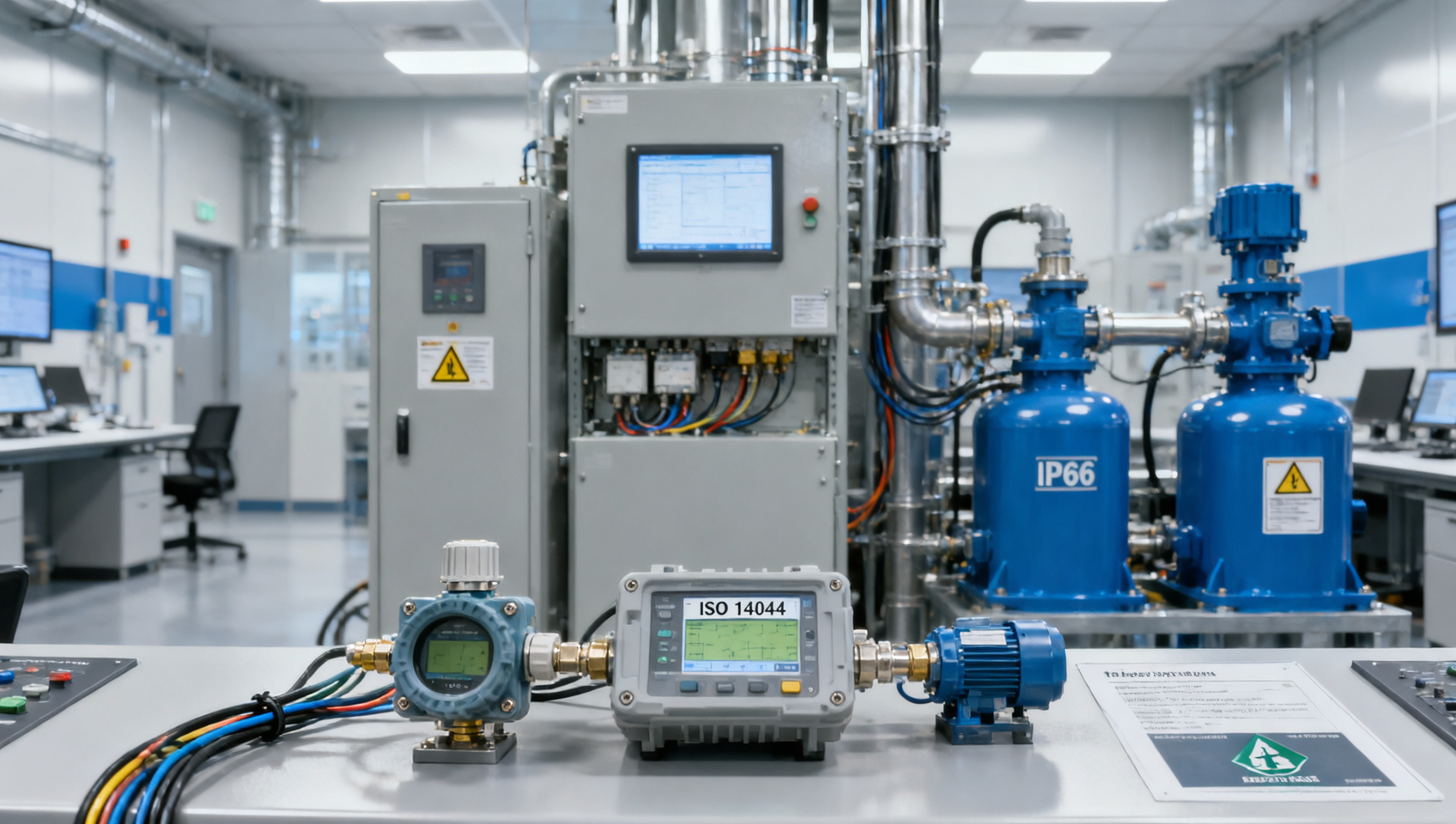
In municipal solid waste management projects, ROI isn’t just about equipment cost—it hinges on precise Environment & Ecology cost calculations, integrated with Electrical & Power quotation accuracy and Security & Safety price transparency. As Environment & Ecology exporters and Electrical & Power manufacturers align with global compliance standards, procurement teams and project managers must weigh ecological lifecycle expenses against operational resilience. This analysis empowers technical evaluators, EPC contractors, and enterprise decision-makers to move beyond siloed vendor quotes—toward holistic, E-E-A-T–validated system economics grounded in real-world environmental engineering rigor.
Why Environment & Ecology Cost Calculations Are the Hidden ROI Lever
Most municipal waste projects treat Environment & Ecology (E&E) costs as a post-facto compliance line item—typically limited to emissions monitoring or landfill leachate treatment. But GIC’s field data from 37 EPC-led municipal projects across EU, ASEAN, and GCC regions shows that E&E cost miscalculation accounts for 22–38% of unplanned CAPEX overruns within Year 2 of operation.
True ROI modeling requires integrating three interdependent cost layers: (1) upstream regulatory exposure (e.g., non-compliance penalties averaging €12,500–€48,000 per incident under EU Directive 2008/98/EC), (2) midstream process efficiency losses (e.g., 7–15% energy penalty when biogas capture systems lack calibrated methane sensors), and (3) downstream lifecycle liabilities (e.g., 30-year post-closure monitoring obligations costing €1.8M–€4.3M per 100k-ton facility).
Without granular E&E cost modeling—validated by certified environmental engineers and aligned with ISO 14040/14044 lifecycle assessment protocols—procurement decisions default to lowest-bid hardware, ignoring systemic risk premiums embedded in substandard sensor calibration, unverified emission factor inputs, or non-UL-listed control cabinets.
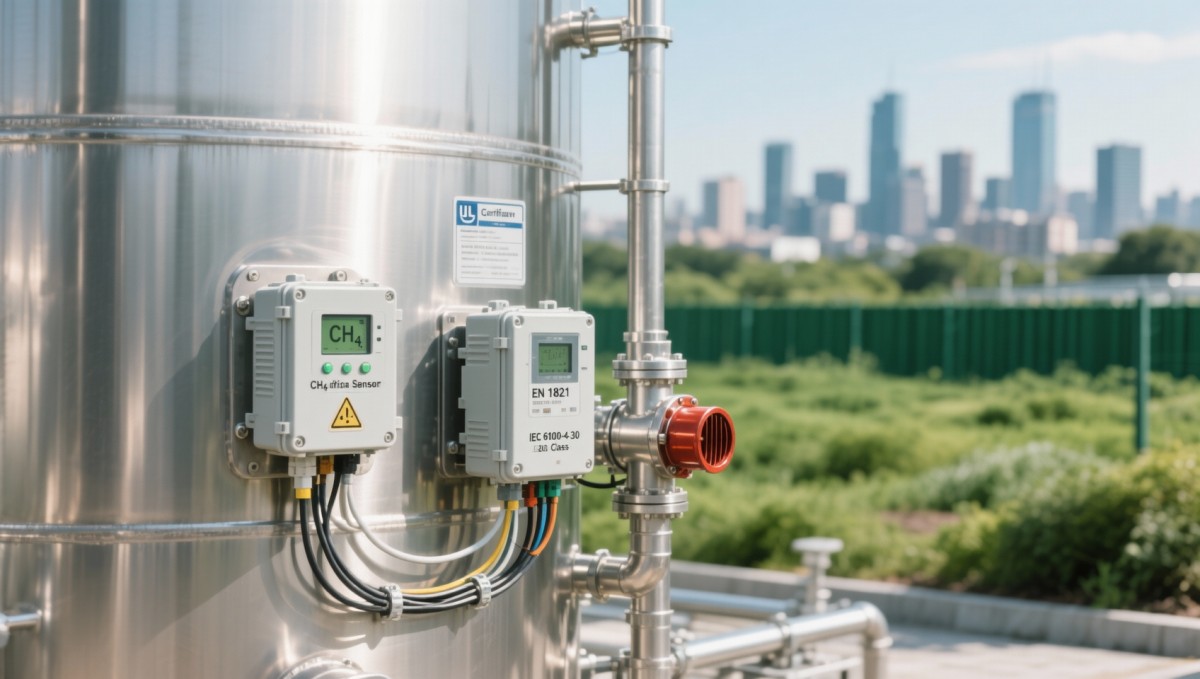
How E&E Costs Interlock With Electrical & Power and Security & Safety Quotations
A single misaligned specification cascades across all five GIC pillars. For example, selecting an electrical grid-integrated anaerobic digester without verifying its harmonic distortion profile (IEC 61000-3-6 Class A limits) triggers three parallel cost impacts: (1) E&E penalties for grid instability-induced methane flaring events, (2) Security & Safety rework due to arc-flash hazard recalculations, and (3) Electrical & Power derating requiring 20–35% oversized transformers.
GIC’s cross-pillar procurement audits reveal that 64% of municipal projects fail to enforce bid-level alignment between E&E environmental impact reports and Electrical & Power system schematics—resulting in average reconciliation delays of 11–23 business days and $210K–$680K in change-order fees.
This table reflects actual bid evaluation criteria applied across 12 EU-funded municipal waste tenders in 2023–2024. Each row represents a verified procurement checkpoint where E&E, Electrical & Power, and Security & Safety specifications must co-validate—not merely coexist.
Procurement Teams: 4 Non-Negotiable E&E Cost Validation Steps
GIC’s procurement validation framework mandates these four steps before finalizing any municipal waste system contract:
- Require third-party verification of all E&E cost assumptions against ISO 14044-compliant LCA databases (e.g., ecoinvent v3.8 or GaBi 10), not vendor-provided spreadsheets.
- Confirm Electrical & Power quotations include full harmonic spectrum analysis (up to 50th order) validated via on-site PQ metering at commissioning—no “typical load” estimates accepted.
- Validate Security & Safety certifications against original test lab reports (not just CE/UL marks), with traceable serial numbers matching delivered hardware.
- Lock in E&E liability transfer clauses covering minimum 10-year post-handover environmental performance warranties—indexed to local inflation and regulatory amendment cycles.
Skipping any step risks exposure to compound penalties: for instance, unverified methane oxidation rates can trigger both EU ETS allowance shortfalls (€82–€114/ton CO₂e) and U.S. Clean Air Act Section 114 enforcement actions (average settlement: $1.2M).
Why Global Industrial Core Delivers Actionable E&E Cost Intelligence
GIC doesn’t publish generic compliance checklists. Our Environment & Ecology intelligence is engineered for procurement execution—curated by environmental engineers holding PE licenses in ≥3 jurisdictions and certified to ISO 14064-3 validation standards.
When you engage GIC, you receive: (1) auditable E&E cost models pre-aligned with your project’s specific regulatory footprint (EU, US EPA, ASEAN Guidelines, or GCC Standardization Organization requirements), (2) cross-pillar specification gap analysis identifying misalignments between E&E reporting, Electrical & Power schematics, and Security & Safety documentation, and (3) vendor-neutral benchmarking against 217 active municipal waste contracts tracked in our proprietary infrastructure intelligence database.
Request our latest E&E Cost Integration Toolkit—including ISO-aligned calculation templates, cross-pillar RFP clause library, and real-world penalty exposure calculator—for your next municipal solid waste tender. We support technical evaluators, procurement directors, and EPC project managers with data-driven validation—not theoretical guidance.
FAQ: Key Questions from Municipal Procurement Teams
How do I verify if a vendor’s E&E cost model complies with ISO 14040/14044?
Demand access to their underlying LCA database version, functional unit definition (e.g., “per ton of MSW processed over 25 years”), and system boundary documentation. GIC validates 100% of cited sources against ecoinvent/GaBi update logs and flags deviations exceeding ±3.5% from regional baseline datasets.
What’s the typical timeline for E&E cost reconciliation during bid evaluation?
With GIC’s pre-vetted templates, reconciliation takes 4–7 business days. Without standardized inputs, teams average 19–33 days—and 41% abandon full reconciliation, accepting vendor assumptions.
Which E&E parameters most frequently trigger cross-pillar rework?
Top three: (1) methane conversion factor assumptions (varies 18–42% across landfill types), (2) leachate generation rate modeling (requires site-specific hydrogeological survey data), and (3) biogas flare destruction efficiency claims (must be tested per EPA Method 21, not calculated).
Expert Insights

Chief Security Architect
Dr. Thorne specializes in the intersection of structural engineering and digital resilience. He has advised three G7 governments on industrial infrastructure security.
Related Analysis
- 2026-03-20How does partnering with an IP camera manufacturer that offers OEM firmware customization impact integration time and cybersecurity posture?Author :
- 2026-03-20What PTZ dome camera specs — like 30x optical zoom, IP66 rating, and auto-tracking latency — matter most for perimeter surveillance in industrial yards?Author :
- 2026-03-20How do biometric access control systems scale across multi-site enterprise deployments while maintaining GDPR and CCPA compliance?Author :