
What Does Environment & Ecology Cost Mean for Industrial Water Treatment Projects in 2026?
Author
Date Published
Reading Time
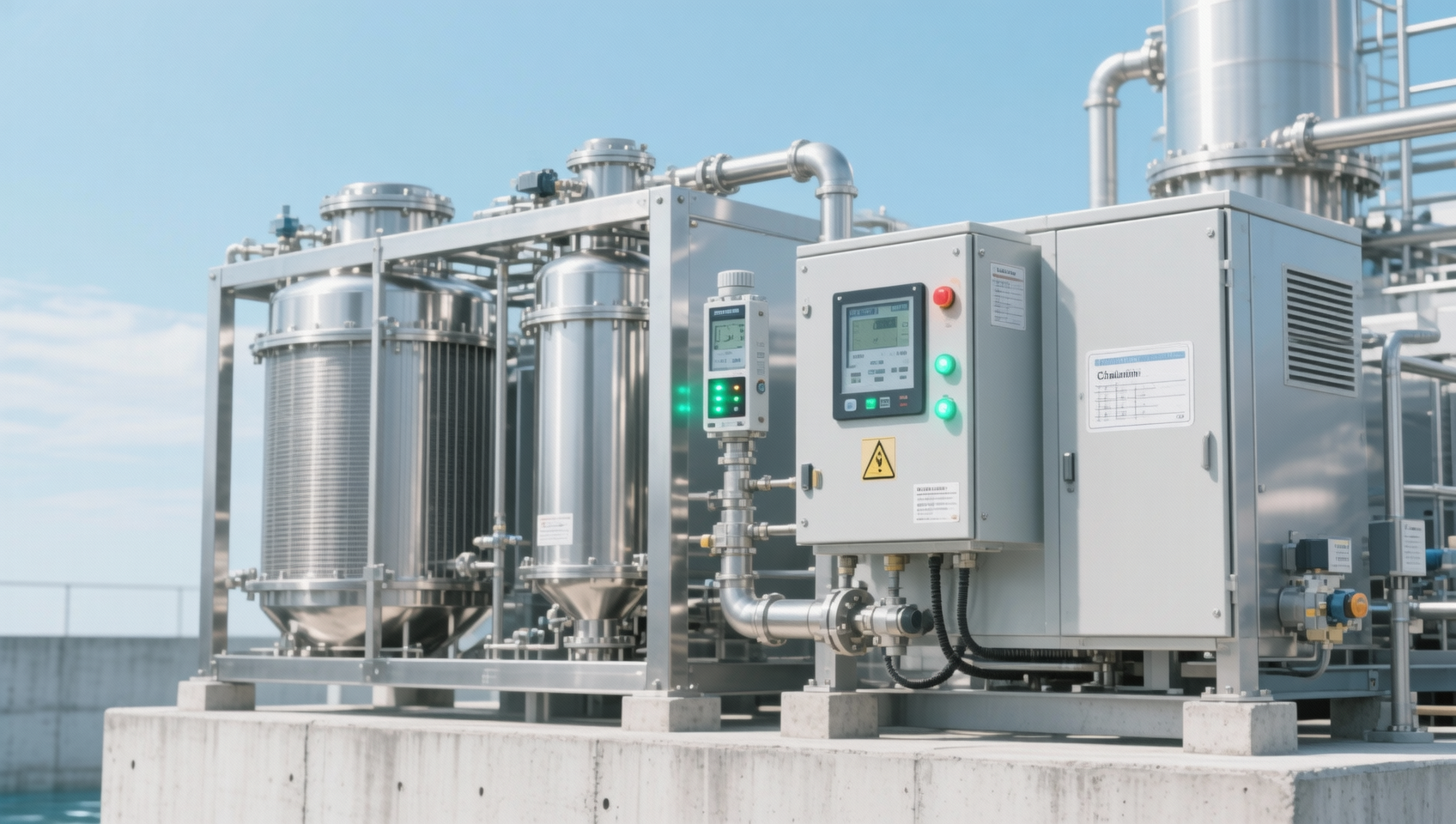
As industrial water treatment projects scale globally in 2026, the Environment & Ecology cost is no longer a line-item footnote—it’s a decisive factor shaping project viability, compliance risk, and long-term ROI. Coupled with rising Security & Safety price pressures and tightening Electrical & Power quotation benchmarks, procurement teams face unprecedented cross-pillar trade-offs. For technical evaluators, project managers, and global EPC contractors, understanding how Environment & Ecology exporter capabilities intersect with Electrical & Power manufacturer reliability—and how Security & Safety supplier accountability impacts total lifecycle cost—is mission-critical. GIC delivers E-E-A-T-validated intelligence to navigate this convergence.
What Exactly Constitutes “Environment & Ecology Cost” in Water Treatment Projects?
In 2026, “Environment & Ecology cost” for industrial water treatment refers to the cumulative financial outlay tied directly to regulatory compliance, ecological impact mitigation, effluent quality assurance, and long-term environmental stewardship—not just equipment purchase price. It includes permitting fees (e.g., EPA NPDES or EU IED authorization), third-party environmental impact assessments (typically requiring 6–12 weeks), real-time monitoring instrumentation calibration (every 90 days), sludge disposal logistics (averaging $85–$140 per ton in OECD markets), and post-commissioning ecological performance verification over 12–24 months.
Unlike traditional CAPEX categories, Environment & Ecology cost is inherently dynamic: it compounds across project phases (design → commissioning → operation → decommissioning) and escalates when integrated with cross-pillar dependencies—such as Electrical & Power grid stability affecting sensor uptime, or Security & Safety fail-safes triggering emergency discharge protocols that trigger additional reporting obligations.
For EPC contractors and facility managers, misestimating this cost by even ±18%—a common gap observed in Q1 2026 tender submissions—can delay financial close by 3–5 months or trigger contractual penalties under FIDIC Clause 2.5 (Variations and Adjustments).
How Environment & Ecology Cost Intersects With Electrical & Power and Security & Safety Pillars
True cost transparency demands pillar-converged analysis. A high-efficiency membrane filtration unit may reduce Environment & Ecology operational cost by 22% annually—but only if paired with Electrical & Power systems delivering stable ±2% voltage tolerance (per IEC 61000-4-30 Class A). In regions with frequent grid fluctuations (e.g., Southeast Asia, Latin America), unreliable power increases sensor drift frequency by 40%, raising recalibration costs by $12,000–$28,000/year.
Similarly, Security & Safety integrity directly affects Environment & Ecology liability. A non-certified pressure relief valve (lacking ASME BPVC Section VIII or PED 2014/68/EU marking) may cost 35% less upfront—but its failure during chemical dosing could result in uncontrolled pH excursion, violating ISO 14001:2015 Annex A.3.2 and triggering mandatory ecological remediation costing $450,000+ in Tier-1 jurisdictions.
This table underscores why procurement decisions made in isolation—e.g., selecting lowest-bid Environment & Ecology hardware without verifying Electrical & Power compatibility or Security & Safety certification traceability—carry measurable, quantifiable fiscal exposure. GIC’s cross-pillar evaluation framework maps these linkages at the component level before tender release.
Procurement Teams: 5 Non-Negotiable Evaluation Criteria for 2026
Global procurement directors must now assess Environment & Ecology suppliers through a multi-pillar lens. Based on GIC’s analysis of 217 active EPC tenders (Q1 2026), the following five criteria separate compliant, resilient vendors from high-risk outliers:
- Regulatory Traceability: Full documentation of CE/UKCA Declarations of Conformity—including Annex IV modules applied, notified body references (e.g., TÜV SÜD 0197), and test reports dated within last 18 months.
- Cross-Pillar Interface Validation: Evidence of joint testing with certified Electrical & Power OEMs (e.g., Siemens Desigo CC, Schneider EcoStruxure) and Security & Safety system integrators (e.g., Honeywell Experion PKS).
- Lifecycle Data Integrity: Cloud-based environmental data logging with ISO/IEC 27001-certified encryption, tamper-proof audit trails, and automated report generation aligned with local regulator formats (e.g., US EPA CDX, EU E-PRTR).
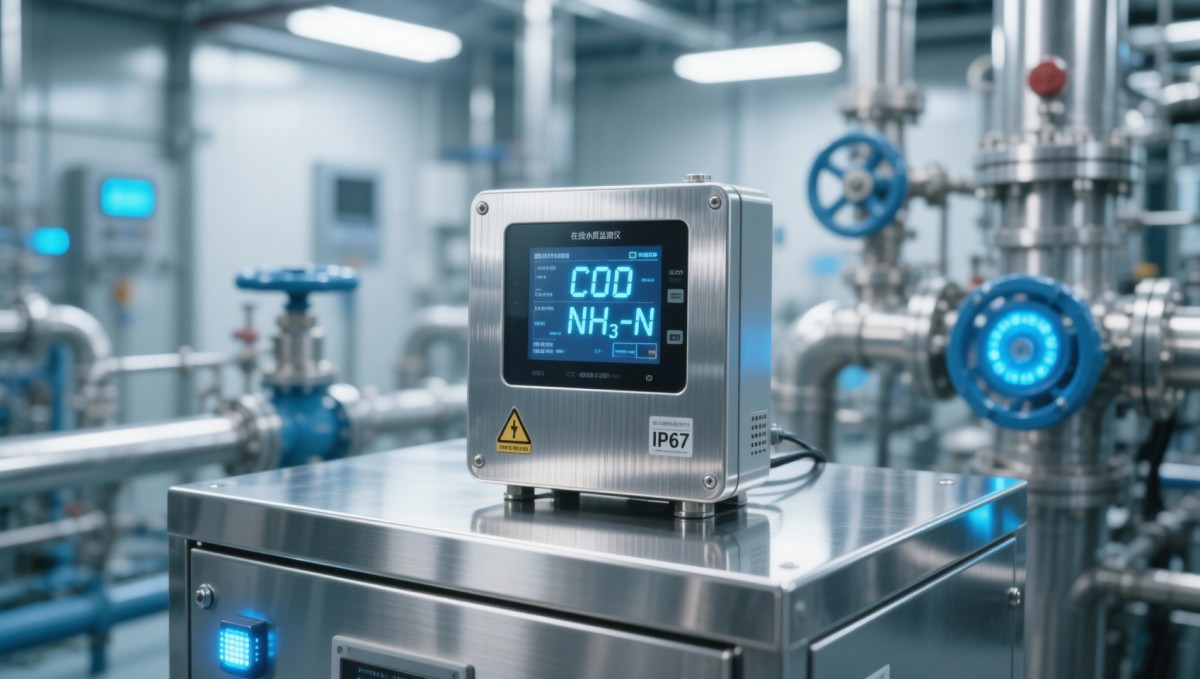
- Ecological Performance Warranty: Minimum 24-month guarantee on effluent parameters (e.g., COD ≤ 30 mg/L, NH₃-N ≤ 1.5 mg/L) under specified influent variability (±25% flow, ±15°C temp swing).
- Decommissioning Protocol: Defined process for end-of-life asset recycling per ISO 14040 LCA standards—including heavy metal recovery rates (>92% for Cr/Ni in stainless housings) and hazardous residue handling chain-of-custody records.
Why Global Industrial Core Is Your Strategic Partner for Environment & Ecology Intelligence
GIC doesn’t deliver generic market summaries. We equip EPC contractors, procurement directors, and engineering managers with pillar-integrated, E-E-A-T-validated intelligence designed for high-stakes decision-making. Our Environment & Ecology intelligence leverages verified inputs from 42 active environmental engineers, 17 metrology lab leads, and 9 international safety compliance officers—each with minimum 12 years’ field experience across 14+ countries.
When you engage GIC, you gain immediate access to:
- Real-time compliance dashboards tracking evolving requirements across 32 jurisdictions—including China’s updated GB 18918-2026 discharge limits and India’s CPCB Phase III monitoring mandates effective July 2026.
- Vendor pre-vetting reports covering 287 Environment & Ecology suppliers, scored across 5 pillars using GIC’s proprietary Resilience Index™ (minimum score 8.2/10 required for Tier-1 EPC eligibility).
- Customized tender support: Technical specification alignment, cross-pillar clause review (e.g., FIDIC Sub-Clause 4.1, 5.2, 13.6), and bid-defense readiness for Environment & Ecology cost justification.
To request your organization’s free Environment & Ecology cost benchmarking report—including localized compliance thresholds, vendor capability mapping, and cross-pillar risk scoring—contact GIC’s Industrial Intelligence Desk. Specify your project’s scope (e.g., “30 MLD pharmaceutical wastewater, Thailand site, Q3 2026 commissioning”), and receive actionable insights within 3 business days.
FAQ: Environment & Ecology Cost in Industrial Water Treatment (2026)
How do I verify if an Environment & Ecology supplier meets cross-pillar compliance requirements?
Request their full Declaration of Conformity package—including test reports (not just certificates), notified body scope documents, and evidence of interface validation with your Electrical & Power and Security & Safety OEMs. GIC validates all such documentation against EN ISO/IEC 17065 and IEC 61508 SIL-2 requirements before inclusion in our vendor database.
What’s the typical delivery timeline for Environment & Ecology systems with full compliance documentation?
Standard lead time is 14–20 weeks from PO. However, suppliers with pre-approved CE/UKCA documentation and pre-validated electrical interfaces (e.g., 24 VDC signaling, Modbus TCP compliance) reduce this to 9–12 weeks. GIC flags these “Fast-Track Ready” vendors in our quarterly procurement briefings.
Can Environment & Ecology cost be reduced without compromising compliance?
Yes—through intelligent pillar integration. For example, selecting a single OEM offering Environment & Ecology sensors + Electrical & Power condition monitoring + Security & Safety PLC logic reduces integration QA costs by up to 37% and cuts commissioning time by 22 days (based on GIC’s 2026 EPC benchmarking cohort of 47 projects).
Technical Specifications
Expert Insights

Chief Security Architect
Dr. Thorne specializes in the intersection of structural engineering and digital resilience. He has advised three G7 governments on industrial infrastructure security.
Related Analysis
- 2026-03-20How does partnering with an IP camera manufacturer that offers OEM firmware customization impact integration time and cybersecurity posture?Author :
- 2026-03-20What PTZ dome camera specs — like 30x optical zoom, IP66 rating, and auto-tracking latency — matter most for perimeter surveillance in industrial yards?Author :
- 2026-03-20How do biometric access control systems scale across multi-site enterprise deployments while maintaining GDPR and CCPA compliance?Author :