Yutong Builds Industry's Most Rigorous Bus Testing Ground, Supporting Global Deliveries
Author
Date Published
Reading Time
Yutong Builds Industry's Most Rigorous Bus Testing Ground, Supporting Global Deliveries
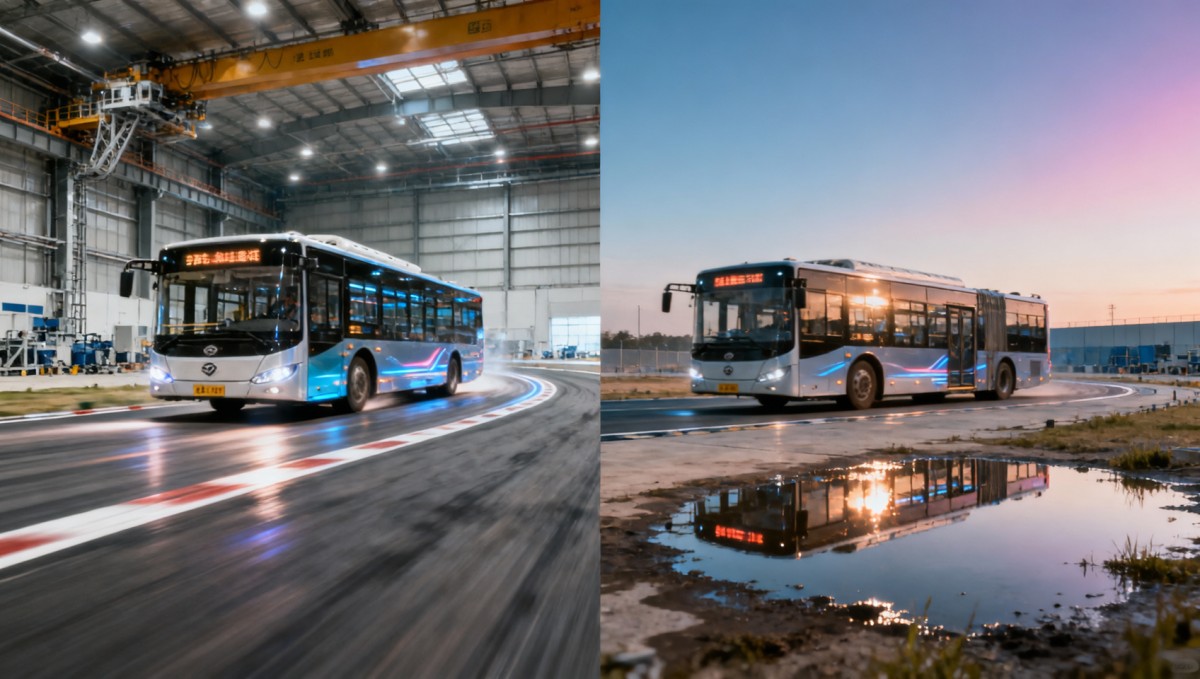
Introduction
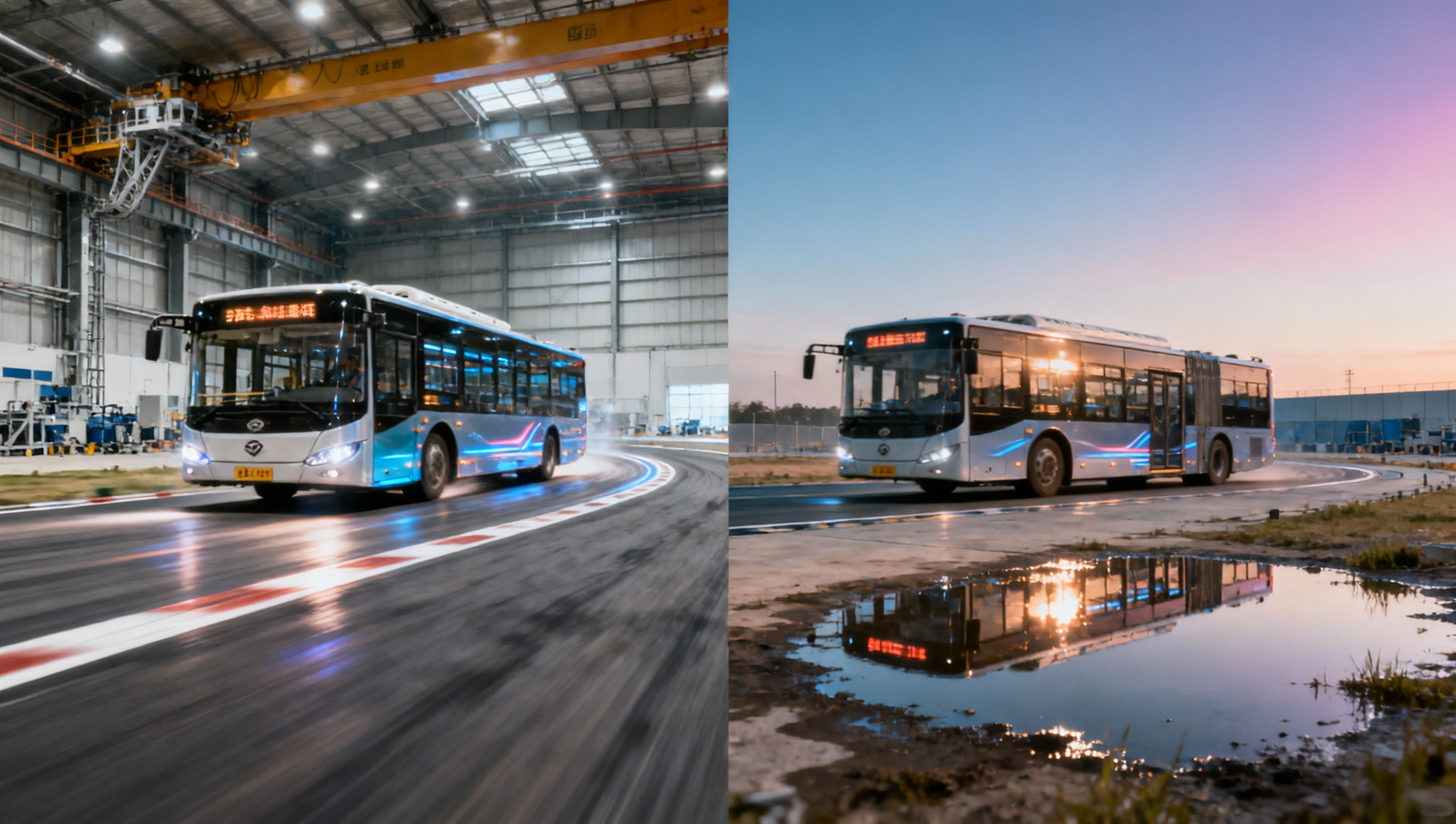
As of April 10, 2026, Yutong Bus has completed the construction of a 60,000-square-meter professional testing ground, featuring five major units including a high-speed loop, water wading pool, and ESP testing area. This development is particularly relevant for the electric vehicle (EV) and public transportation sectors, as it enhances Yutong's ability to deliver buses that meet stringent international standards without requiring additional validation. The facility has already facilitated successful bids in Chile and Kazakhstan, signaling a shift toward more reliable, ready-to-deploy electric buses in demanding markets.
Event Overview
Yutong Bus has established a comprehensive testing facility covering 60,000 square meters, equipped with specialized tracks for high-speed, water immersion, and electronic stability testing. All exported buses must pass 100% of the required tests, ensuring compliance with international standards. This capability has enabled Yutong to secure contracts in Chile and Kazakhstan, where extreme operating conditions necessitate robust vehicle performance.
Impact on Sub-Sectors
Public Transportation Operators
Public transport companies in regions with harsh climates or challenging terrain can now source buses that are pre-validated for immediate use, reducing downtime and secondary testing costs.
EV Component Suppliers
Suppliers of batteries, motors, and other critical EV components may need to align their products with Yutong's testing protocols, as the company's standards could become a benchmark for reliability in extreme conditions.
Government Procurement Agencies
Agencies overseeing public transport electrification programs may prioritize suppliers with similar testing capabilities, as Yutong's approach demonstrates a commitment to long-term vehicle performance.
Key Considerations for Stakeholders
Monitor Testing Standards Evolution
Competitors and partners should track how Yutong's testing protocols influence global procurement criteria, particularly in markets with extreme operational demands.
Assess Supply Chain Readiness
Component manufacturers must evaluate whether their products can meet the durability standards implied by Yutong's full-lifecycle testing approach.
Prioritize Markets with Rigorous Requirements
Businesses targeting regions like South America or Central Asia should consider how pre-validated vehicle offerings could reshape competitive dynamics.
Editor's Perspective
From an industry standpoint, Yutong's investment signals a move toward eliminating post-purchase validation as a market barrier. While the testing ground is operational today, its broader impact will depend on whether competitors adopt similar facilities or if procurement entities formalize these standards. The development is particularly significant for markets where infrastructure challenges have historically slowed EV adoption.
Conclusion
Yutong's testing facility represents a strategic advancement in addressing real-world operational challenges for electric buses. Rather than merely expanding production capacity, this initiative focuses on verifying performance under extreme conditions—a factor that could redefine reliability expectations in global tenders. For now, the industry should view this as a case study in bridging the gap between manufacturer claims and end-user operational requirements.
Source Information
Primary source: Yutong Bus official project announcement (April 10, 2026). Ongoing monitoring required for adoption rates of similar testing standards by competitors and regulatory bodies.
Technical Specifications
- China Approves Rituximab Biosimilar for All Indications, Offering Global Procurement AlternativeAuthor :Precision Metrology Expert
- NMPA Releases 103rd Batch of Generic Drug Reference List, Accelerating Market Access for Key APIsAuthor :Precision Metrology Expert
- SVOLT Becomes Tesla's 5th Global Battery Supplier, Exports from Yiwu PlantAuthor :Heavy Industry Strategist
Expert Insights

Chief Security Architect
Dr. Thorne specializes in the intersection of structural engineering and digital resilience. He has advised three G7 governments on industrial infrastructure security.
Related Analysis
- Apr 13, 2026China Approves Rituximab Biosimilar for All Indications, Offering Global Procurement AlternativeAuthor :Precision Metrology Expert
- Apr 13, 2026NMPA Releases 103rd Batch of Generic Drug Reference List, Accelerating Market Access for Key APIsAuthor :Precision Metrology Expert
- Apr 13, 2026SVOLT Becomes Tesla's 5th Global Battery Supplier, Exports from Yiwu PlantAuthor :Heavy Industry Strategist
Core Sector // 01
Security & Safety
- Yutong Builds Industry's Most Rigorous Bus Testing Ground, Supporting Global DeliveriesAuthor :Heavy Industry Strategist

- Stainless steel pipe fittings discolor after pickling — is surface passivation consistent across batches?Author :Heavy Industry Strategist

- Butt weld fittings wholesale shipments arrive with mismatched bevel angles — why visual inspection isn’t enoughAuthor :Heavy Industry Strategist

- Forged steel fittings crack near heat-affected zones — preheating isn’t optional for thick sectionsAuthor :Heavy Industry Strategist

- Flange manufacturer certifications don’t guarantee dimensional compliance — ASME B16.5 tolerances are frequently exceededAuthor :Heavy Industry Strategist

- Slip on flanges separate under pulsating flow — gasket compression isn’t enough without proper alignmentAuthor :Heavy Industry Strategist

- Blind flanges wholesale units shift during bolt tightening — uneven torque application explains most field failuresAuthor :Heavy Industry Strategist

- Weld neck flanges deform under thermal cycling — hub geometry affects fatigue life more than material gradeAuthor :Heavy Industry Strategist